

 Forming a Large Steel Tube
 Forming a Magnetic Steel Part
 Forging a magnetic steel rod





Benefits of Forging with Induction
A superior and flame-free alternative to furnace heating, induction heating provides faster, more efficient heat in forging applications. The process relies on electrical currents to produce heat within the part that remains confined to precisely targeted areas.
High power density means extremely rapid heating, with exacting control over the heated area.
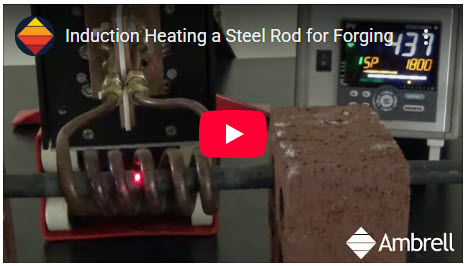
 Pre Heating Steel For Forging Tools
Heat customer supplied steel bars for a preheat application for forging.
 Forging a steel rod to stamp saw blade handles
The customer-supplied rods were used to design the induction heating coils to deliver energy efficiently using the EKOHEAT system.
 Hot Heading Steel Wire: Create Screws
Preheating steel wire before hot heading to create a screw; they wanted to switch from cold heading to extend tool life.
Heating an area around elliptical hole in steel tube prior to forming; the client had been using a torch for this application.
 Heating Cutting Tools for Forging
An infrared pyrometer was used to monitor the temperature of the part during the heating cycle. Two parts were tested.
 Flattening/Bending Steel Tubes
Induction forging elevates the temperature much more rapidly than an oven, targeting the precise portion of the part that requires heating every time, presenting a significant advantage over an oven
Induction heating drove the part to forming temperature more rapidly than a torch. Induction heating targets the precise portion of the part that requires heating every time
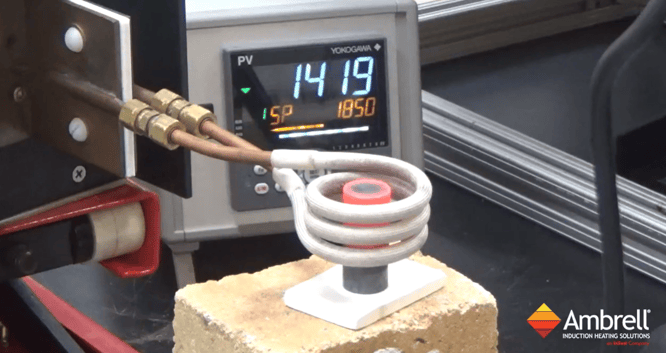
Testing determined that the magnetic steel rod heated to required temperature within 1.5 seconds with an EASYHEAT LI induction heating system.
 Forging silver bars to create collectible coins
The client had been using an oven, and forging with induction can present some speed advantages. Unlike an oven, induction heating offers instant on/instant off heating
 Forging rods of various materials and dimensions
Each of the rods were placed into the induction forging coil and heated. They achieved the targeted temperature in 30-40 seconds. The coil was designed for a 5 (127 mm) heat zone.
 Preheating a brass rod for forging
The client wanted to cut the cycle time it was getting from a torch in half, and the Ambrell induction process was able to meet that goal.
 Preheating a billet for forging
The client needed to improve the cycle time of their gas furnace, and by preheating it prior to insertion into the furnace, time was saved and the client didn't have to invest in doubling the size of their furnace.
 Preheating a brass assembly for forging blanks
The client was using a competitor's system, and it was heating the assembly at a slower rate. They needed to increase their production rate, which this solution was able to achieve.
 Preheating steel rods for forging 1
The client targeted an aggressive cycle time, which Ambrell was able to achieve thanks to its process design and the efficiency of induction heating
 Preheating for forging of steel pins
Fast, precise heating of the pin - 2 minutes and 36 seconds were saved on heating all of the rim's pins when compared to using a torch
 Preheating titanium rods for forging turbine blades
Forging with induction provides increased production rates, repeatable, reliable & consistent heat without flame and hands free heating that involves no operator skill for manufacturing
 Pre Heating Mold Release Push Rod For Forging
To heat the ends of steel rods to 1800 °F using induction prior to a forging operation. Processing of the rods includes heating, pressing in a two part die to forge the push rod end, and a final induction heating in a channel coil to temper the rods and relieve the forging stresses.
 Pre Heating Steel For Forging Horse Shoes
Induction forging provides for hands-free heating that involves no operator skill for manufacturing, improved production rates with minimal defects, low pressure and minimal residual part stress with even distribution of heating
 Heating Inconel Billets for Forging
A four-turn helical coil is used to deliver uniform heat to the inconel billets. Both size billets heat to 2050 °F (1121.1 °C) within 12 seconds.
Pre Heating Steel For Forging Tools
Heat customer supplied steel bars for a preheat application for forging.
Forging a steel rod to stamp saw blade handles
The customer-supplied rods were used to design the induction heating coils to deliver energy efficiently using the EKOHEAT system.
Hot Heading Steel Wire: Create Screws
Preheating steel wire before hot heading to create a screw; they wanted to switch from cold heading to extend tool life.
Heating an area around elliptical hole in steel tube prior to forming; the client had been using a torch for this application.
Heating Cutting Tools for Forging
An infrared pyrometer was used to monitor the temperature of the part during the heating cycle. Two parts were tested.
Flattening/Bending Steel Tubes
Induction forging elevates the temperature much more rapidly than an oven, targeting the precise portion of the part that requires heating every time, presenting a significant advantage over an oven
Induction heating drove the part to forming temperature more rapidly than a torch. Induction heating targets the precise portion of the part that requires heating every time
Testing determined that the magnetic steel rod heated to required temperature within 1.5 seconds with an EASYHEAT LI induction heating system.
Forging rods of various materials and dimensions
Each of the rods were placed into the induction forging coil and heated. They achieved the targeted temperature in 30-40 seconds. The coil was designed for a 5 (127 mm) heat zone.
Preheating a billet for forging
The client needed to improve the cycle time of their gas furnace, and by preheating it prior to insertion into the furnace, time was saved and the client didn't have to invest in doubling the size of their furnace.
Preheating steel rods for forging 1
The client targeted an aggressive cycle time, which Ambrell was able to achieve thanks to its process design and the efficiency of induction heating
Preheating for forging of steel pins
Fast, precise heating of the pin - 2 minutes and 36 seconds were saved on heating all of the rim's pins when compared to using a torch
Pre Heating Mold Release Push Rod For Forging
To heat the ends of steel rods to 1800 °F using induction prior to a forging operation. Processing of the rods includes heating, pressing in a two part die to forge the push rod end, and a final induction heating in a channel coil to temper the rods and relieve the forging stresses.
Pre Heating Steel For Forging Horse Shoes
Induction forging provides for hands-free heating that involves no operator skill for manufacturing, improved production rates with minimal defects, low pressure and minimal residual part stress with even distribution of heating
Preheating a brass rod for forging
The client wanted to cut the cycle time it was getting from a torch in half, and the Ambrell induction process was able to meet that goal.
Preheating a brass assembly for forging blanks
The client was using a competitor's system, and it was heating the assembly at a slower rate. They needed to increase their production rate, which this solution was able to achieve.
Heating Inconel Billets for Forging
A four-turn helical coil is used to deliver uniform heat to the inconel billets. Both size billets heat to 2050 °F (1121.1 °C) within 12 seconds.
Forging silver bars to create collectible coins
The client had been using an oven, and forging with induction can present some speed advantages. Unlike an oven, induction heating offers instant on/instant off heating
Preheating titanium rods for forging turbine blades
Forging with induction provides increased production rates, repeatable, reliable & consistent heat without flame and hands free heating that involves no operator skill for manufacturing



AMBRELL CORPORATION
1655 Lyell Avenue
Rochester, NY 14606
United States
 Directions
T: +1 585 889 9000
F: +1 585 889 4030
Contact Sales
Contact Orders
Contact Service
AMBRELL B.V.
Holtersweg 1
7556 BS Hengelo
The Netherlands
Directions
T: +31 880 150 100
F: +31 546 788 154
Contact Sales
Contact Orders
Contact Service
AMBRELL Ltd.
Front Suite, 1st Floor, Charles House
148-149 Gt Charles Street
Birmingham, B3 3HT
United Kingdom
T: +44 1242 514042
F: +31 546 788 154
Contact Sales
Contact Orders
Contact Service