

 Solder a vent tube assembly
 Soldering a Radio Antenna
 Soldering Solar Flex Circuits
 Soldering a Steel Housing
 Soldering Brass Slip Ring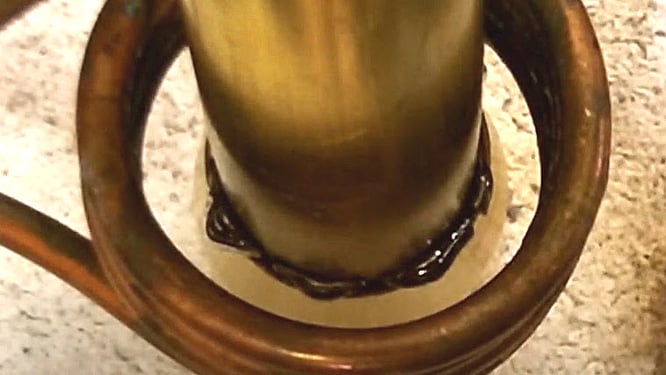





To solder customer's copper float assembly at 500 °F (270 °C)
 Solder a copper fuse assembly to 350-400°F for a preheat application
To preheat the client's copper fuse assembly to 350-400 °F for a soldering application.
 Solder cable and connector assembly to 350-400 °F
Once a satisfactory heat pattern was achieved in the time frame allowed, samples were run at multiple settings
 Soldering Brass and Copper Components
A solder wire preform was placed on the part to allow for repeatable placement of solder in every joint. Four top or four bottom joints will be heated at one time within 2-3 minutes for the soldering application.
 Desoldering Customer Assemblies with Induction Heating
To heat customer assemblies for a desoldering application. The client had been outsourcing this task, but wanted to see if it would be viable to bring the process in house.
 Heating a Copper Assembly for Soldering
To heat a glass feed-through inside a copper block for a soldering application, one side at a time. This was a new application/process for the client.
 Soldering Ferrule and Module Assembly
To heat ferrule and module assemblies for a soldering application in the fiber optics industry.
 Soldering Co-axial Wire to a Metal Frame
Given the small size of the part and the assembly's geometry, a graphite cylinder was required as a susceptor.
 Heating a Kovar Ferrule for Glass Soldering
The solder formed a relatively uniform domed seal around the fiber despite the asymmetry of the open C coil. It took under 10 seconds to heat the part to soldering temperature
 Soldering Four Fusible Copper Strips
Soldering with Induction takes under 10 seconds to heat four copper strips concurrently, resulting in a boost in throughput for the client. Induction is a highly repeatable process that heats just the area of the copper strip that requires it
 Soldering a pair of magnetic steel pins
Soldering with induction required under 10 seconds and is a highly repeatable process; the customer can expect the same result every time with only the portion of the part requiring heating being heated.
 Soldering a rivet onto a steel tank cap
Soldering with induction proved faster than the client's previous heating torch process. It is also is a repeatable heating process, so the client gets superior results and is more energy efficient than torch heating.
 Soldering copper tabs for stringing, tabbing solar panels
Induction's precision soldering ensures repeatable results and less damage to surrounding substrates while demonstrating reduced heat loss and lower energy usage...
 Soldering electrical wire to a copper grounding
For this grounding lug soldering application, induction delivers consistent result is achieved each time and does not present a flame, so it helps create a safer, cooler working environment than other methods
 Soldering brass and steel radiator caps
The induction soldering process is completed within 15 seconds with consistent results without the use of flame, creating a safer, cooler working environment...
 Soldering a copper tube to a brass flow valve
The heating process was completed within 12 seconds, faster than the client's gas torch and more reliably. Without flame, induction helps create a safer, cooler working environment.
![image: Soldering a copper wire, contactor assembly [motor]](https://www.ambrell.com/hs-fs/hubfs/ambrell-images/Applications/Thumbs/soldering_45.jpg?width=95&height=95&name=soldering_45.jpg) Soldering a copper wire, contactor assembly [motor]
Soldering a copper wire, contactor assembly [motor]
High intensity heat must be applied to the joint area for this application so that thermal conduction of the copper does not sink away the heat delivered from the induction process.
 Hermetic Sealing a Ferrule & Fiber Optic Cable
To heat a Kovar ferrule and fiber optic cable to 297 °F within 10 seconds for a soldering application, to form a hermetic seal
 Soldering a fine copper wire to an electrical connector assembly
induction heating delivered a higher quality joint, is more energy efficient than the outdated system that the client was using.
 Soldering a steel canister for sealing
Current hand-soldering process results in uneven, non-uniform joints and requires long production times. Induction delivers uniform, quality joints by generating heat within the end-plate and reservoir walls.
 Solder Fiber Optic Cable to Ferrule & Preform
Induction heating provides rapid localized heat only where needed, repeatable, consistent results with clean, controllable joints
 Soldering a steel funnel to flex spout
Induction heating delivers non-contact energy-efficient heat without flame, resulting in repeatable and consistent results
 Hermetically sealing a fiber optic cable in a kovar ferrule
Induction heating provides instant start up time, requiring very little power resources, pin point accuracy, a clean source of heat which is easily integrated into existing automated systems
 Soldering windows to time indicator housings
Soldering soda lime glass metal edged windows to steel time
 Soldering a copper chip to a silver dipped brass RF attenuator
Induction heating provides repeatable consistent results in all three areas soldered at the same time, not individually. Faster process time, increased production and even distribution of heating
 Soldering wires on a three position electrical socket
Customer is currently using a soldering iron & individually touching each soldering point which is producing inconsistent results and quality issues.
 Soldering 3 copper spacers to circuit board simultaneously
Induction heating delivers precise, controlled application of heat in a repeatable, non-contact, clean heating process, enabling increased production capacity and improved energy efficiency
 Soldering Electrical Flex Circuits
To heat multiple joints on flex circuit strips to 180-200 °F within seven seconds for a soldering application.
To heat a coaxial antenna assembly to 600 °F within 2 seconds for a soldering application. The goal to improve on an existing procedure with a soldering iron which required 10 to 15 seconds.
Heat multiple joints on solar flex circuit strips to 500 °F (260 °C) within ten seconds for a soldering application.
 Soldering three fuse caps simultaneously
Soldering three fuse caps simultaneously to reflow lead free solder and make a joint between the fuse cap and fuse wire guide
 Soldering three brass connectors in a solar panel junction box assembly
Solder three brass connectors one at a time in a solar panel junction box without affecting the components in the junction box
 Soldering a steel cover onto a nickel plated EMI filter
Soldering a nickel plated steel cover onto a nickel plated steel EMI filter housing without damaging the RF circuit
 Soldering 2 electrical wires to copper buss bar
Induction heating delivers reduced solder time, even distribution of heating and improved joint-to-joint consistency
 Soldering an LED assembly to an aluminum spotlight housing
A multi turn pancake coil is used to heat the bottom of the aluminum spotlight housing. The LED housing was not available so this application is done with temperature sensing paint to determine the feasibility
 Soldering connector to wire harness
Induction heating provides reduced production cost, faster process time, hands-free heating that involves no operator skill for manufacturing
 Soldering two connectors simultaneously to ground plate
Induction heating provides non-contact heat, hands-free heating that involves no operator skill for manufacturing with even distribution of heating
 Soldering fabric to kovar tip assembly
A three turn pancake coil is used to heat the tip of the cone to 300 °F (149 °C) in 2-3 seconds
 soldering-a-kovar-piece-with-glass-to-a-copper-base
Induction heating provides ability to use same equipment for both assembly and repair, hands-free heating that involves no operator skill for manufacturing, and uniform control of heat from part to part
 Soldering brass and copper (medical equipment)
This process is completed in two steps that use a 3 turn helical coil. The first process is to solder the brass ring to the copper piece which takes 85 seconds...
 Soldering circuit board posts solder preforms
Induction heating provides hands-free heating that involves no operator skill for manufacturing, lends itself well to automation, solder controlled by preforms, no excess left on board, good solder flow without over heating the board
 Soldering Brass end cap on heat exchanger
A dual four turn pancake coil is used to solder 2 brass caps per cycle. Liquid solder is squirted onto the end cap and is heated for 18 seconds at 302 °F (150 °C) to burn off the flux
 Reflowing the solder of an area on a circuit board
An aluminum fixture is a large heat sink to the induction field. In order for solder alloy to wick and run the length of the overlap area, flux is applied to the solder location...
 Soldering of satellite antennas
Induction heating delivers increased production rate due to speed of heating, higher quality vs. a soldering iron due to precision and repeatability and cost savings due to reduced scrap and higher quality production
 Soldering wires onto connector assemblies
Compared to using a manual soldering iron, induction heating precisely applies heat to for higher quality solder joints This is ideal for integrating with an automated system. By stick- feeding the solder more aesthetically pleasing parts are produced.
 Soldering Co-axial Wire Assemblies
A multi-turn helical coil is used and temperature-indicating paint is applied to the joint area. The wire assembly is placed over the induction heating coil, and RF power is applied.
 Soldering a copper tab on a speaker ring
With an efficient coil design induction heating easily reaches the desired reflow temperature in a very short amount of time.
 Soldering a Stainless Steel Tube to Cylinder
Heat a .125 in (3.175mm) diameter stainless steel tube to a 1 diameter cylinder 1 (25.4mm) tall for a soldering application
A two-turn induction coil is used to deliver the heat energy into the steel housing. A small diameter solder wire is used to form a solder ring for the assembly process...
 Soldering Cellular Phone Antenna
Soldering two brass tubes measuring 3/4-inch and 1/4-inch together for use as cellular phone antennas. The lengths of tubes range from four (4) feet to twelve (12) feet, and must be soldered along the axial side.
 Soldering Ice Machine Evaporator assemblies
To heat a section of 3/8 inch copper tubing along with a 90 degree elbow for soldering. The copper tubing is to be used in Ice Machine Evaporator Assemblies, and soldering takes place after the tubes have been placed within the assembly.
 Soldering Brass Bellows Assembly
To heat a brass bellows and end cap assembly to 450F for soldering within 20 seconds. Presently, a soldering iron is used to produce the joint between the bellows and cap.
To heat 1.75, 3 and 6 inch diameter brass slip rings and a sheathed copper wire assembly to 360F for soldering within three (3) to six (6) seconds. Currently production is accomplished by using a soldering iron and stick feeding rosin-cored solder...
 Soldering Steel Connectors to a Brass Block
Heat an assembly of small, gold-plated steel connectors to a brass block, heating to specific regions of part
To solder customer's copper float assembly at 500 °F (270 °C)
Solder a copper fuse assembly to 350-400°F for a preheat application
To preheat the client's copper fuse assembly to 350-400 °F for a soldering application.
Soldering Brass and Copper Components
A solder wire preform was placed on the part to allow for repeatable placement of solder in every joint. Four top or four bottom joints will be heated at one time within 2-3 minutes for the soldering application.
Heating a Copper Assembly for Soldering
To heat a glass feed-through inside a copper block for a soldering application, one side at a time. This was a new application/process for the client.
Soldering Four Fusible Copper Strips
Soldering with Induction takes under 10 seconds to heat four copper strips concurrently, resulting in a boost in throughput for the client. Induction is a highly repeatable process that heats just the area of the copper strip that requires it
Soldering copper tabs for stringing, tabbing solar panels
Induction's precision soldering ensures repeatable results and less damage to surrounding substrates while demonstrating reduced heat loss and lower energy usage...
Soldering electrical wire to a copper grounding
For this grounding lug soldering application, induction delivers consistent result is achieved each time and does not present a flame, so it helps create a safer, cooler working environment than other methods
Soldering a copper tube to a brass flow valve
The heating process was completed within 12 seconds, faster than the client's gas torch and more reliably. Without flame, induction helps create a safer, cooler working environment.
Soldering a copper wire, contactor assembly [motor]
High intensity heat must be applied to the joint area for this application so that thermal conduction of the copper does not sink away the heat delivered from the induction process.
Soldering a fine copper wire to an electrical connector assembly
induction heating delivered a higher quality joint, is more energy efficient than the outdated system that the client was using.
Soldering a copper chip to a silver dipped brass RF attenuator
Induction heating provides repeatable consistent results in all three areas soldered at the same time, not individually. Faster process time, increased production and even distribution of heating
Soldering 3 copper spacers to circuit board simultaneously
Induction heating delivers precise, controlled application of heat in a repeatable, non-contact, clean heating process, enabling increased production capacity and improved energy efficiency
Soldering Electrical Flex Circuits
To heat multiple joints on flex circuit strips to 180-200 °F within seven seconds for a soldering application.
To heat a coaxial antenna assembly to 600 °F within 2 seconds for a soldering application. The goal to improve on an existing procedure with a soldering iron which required 10 to 15 seconds.
Heat multiple joints on solar flex circuit strips to 500 °F (260 °C) within ten seconds for a soldering application.
Soldering three fuse caps simultaneously
Soldering three fuse caps simultaneously to reflow lead free solder and make a joint between the fuse cap and fuse wire guide
Soldering 2 electrical wires to copper buss bar
Induction heating delivers reduced solder time, even distribution of heating and improved joint-to-joint consistency
Soldering connector to wire harness
Induction heating provides reduced production cost, faster process time, hands-free heating that involves no operator skill for manufacturing
Soldering two connectors simultaneously to ground plate
Induction heating provides non-contact heat, hands-free heating that involves no operator skill for manufacturing with even distribution of heating
soldering-a-kovar-piece-with-glass-to-a-copper-base
Induction heating provides ability to use same equipment for both assembly and repair, hands-free heating that involves no operator skill for manufacturing, and uniform control of heat from part to part
Soldering brass and copper (medical equipment)
This process is completed in two steps that use a 3 turn helical coil. The first process is to solder the brass ring to the copper piece which takes 85 seconds...
Soldering circuit board posts solder preforms
Induction heating provides hands-free heating that involves no operator skill for manufacturing, lends itself well to automation, solder controlled by preforms, no excess left on board, good solder flow without over heating the board
Soldering of satellite antennas
Induction heating delivers increased production rate due to speed of heating, higher quality vs. a soldering iron due to precision and repeatability and cost savings due to reduced scrap and higher quality production
Soldering wires onto connector assemblies
Compared to using a manual soldering iron, induction heating precisely applies heat to for higher quality solder joints This is ideal for integrating with an automated system. By stick- feeding the solder more aesthetically pleasing parts are produced.
Soldering Co-axial Wire Assemblies
A multi-turn helical coil is used and temperature-indicating paint is applied to the joint area. The wire assembly is placed over the induction heating coil, and RF power is applied.
Soldering a copper tab on a speaker ring
With an efficient coil design induction heating easily reaches the desired reflow temperature in a very short amount of time.
Soldering Cellular Phone Antenna
Soldering two brass tubes measuring 3/4-inch and 1/4-inch together for use as cellular phone antennas. The lengths of tubes range from four (4) feet to twelve (12) feet, and must be soldered along the axial side.
Soldering Ice Machine Evaporator assemblies
To heat a section of 3/8 inch copper tubing along with a 90 degree elbow for soldering. The copper tubing is to be used in Ice Machine Evaporator Assemblies, and soldering takes place after the tubes have been placed within the assembly.
To heat 1.75, 3 and 6 inch diameter brass slip rings and a sheathed copper wire assembly to 360F for soldering within three (3) to six (6) seconds. Currently production is accomplished by using a soldering iron and stick feeding rosin-cored solder...
Solder cable and connector assembly to 350-400 °F
Once a satisfactory heat pattern was achieved in the time frame allowed, samples were run at multiple settings
Soldering a pair of magnetic steel pins
Soldering with induction required under 10 seconds and is a highly repeatable process; the customer can expect the same result every time with only the portion of the part requiring heating being heated.
Soldering a rivet onto a steel tank cap
Soldering with induction proved faster than the client's previous heating torch process. It is also is a repeatable heating process, so the client gets superior results and is more energy efficient than torch heating.
Soldering a steel canister for sealing
Current hand-soldering process results in uneven, non-uniform joints and requires long production times. Induction delivers uniform, quality joints by generating heat within the end-plate and reservoir walls.
Soldering a steel funnel to flex spout
Induction heating delivers non-contact energy-efficient heat without flame, resulting in repeatable and consistent results
Soldering windows to time indicator housings
Soldering soda lime glass metal edged windows to steel time
Soldering a steel cover onto a nickel plated EMI filter
Soldering a nickel plated steel cover onto a nickel plated steel EMI filter housing without damaging the RF circuit
A two-turn induction coil is used to deliver the heat energy into the steel housing. A small diameter solder wire is used to form a solder ring for the assembly process...
Desoldering Customer Assemblies with Induction Heating
To heat customer assemblies for a desoldering application. The client had been outsourcing this task, but wanted to see if it would be viable to bring the process in house.
Soldering brass and steel radiator caps
The induction soldering process is completed within 15 seconds with consistent results without the use of flame, creating a safer, cooler working environment...
Soldering three brass connectors in a solar panel junction box assembly
Solder three brass connectors one at a time in a solar panel junction box without affecting the components in the junction box
Soldering Brass end cap on heat exchanger
A dual four turn pancake coil is used to solder 2 brass caps per cycle. Liquid solder is squirted onto the end cap and is heated for 18 seconds at 302 °F (150 °C) to burn off the flux
Soldering Brass Bellows Assembly
To heat a brass bellows and end cap assembly to 450F for soldering within 20 seconds. Presently, a soldering iron is used to produce the joint between the bellows and cap.
Soldering Steel Connectors to a Brass Block
Heat an assembly of small, gold-plated steel connectors to a brass block, heating to specific regions of part
Heating a Kovar Ferrule for Glass Soldering
The solder formed a relatively uniform domed seal around the fiber despite the asymmetry of the open C coil. It took under 10 seconds to heat the part to soldering temperature
Hermetically sealing a fiber optic cable in a kovar ferrule
Induction heating provides instant start up time, requiring very little power resources, pin point accuracy, a clean source of heat which is easily integrated into existing automated systems
Soldering fabric to kovar tip assembly
A three turn pancake coil is used to heat the tip of the cone to 300 °F (149 °C) in 2-3 seconds
Benefits of Soldering with Induction
-
Delivers precise, localized heat
-
Increases production rates with faster heating cycles
-
Reduces defect rates with repeatable, reliable heating
-
Eliminates variability from part to part
-
Maintains metallurgical characteristics of the individual metals
This is accomplished without open flame or the restrictions of a batch process.
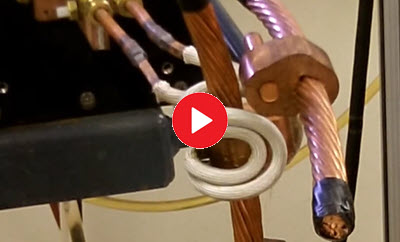 Video: Soldering grounding lugs for power transmission
Get 10 Soldering Application Notes
We have collected 10 of THE LAB's most popular soldering application notes to help you understand the many ways induction heating can improve your precision soldering process.
10 Induction Heating Application Notes
 We have collected these 10 popular Application Notes to help you understand the many ways induction heating can improve your heating processes.



AMBRELL CORPORATION
1655 Lyell Avenue
Rochester, NY 14606
United States
 Directions
T: +1 585 889 9000
F: +1 585 889 4030
Contact Sales
Contact Orders
Contact Service
AMBRELL B.V.
Holtersweg 1
7556 BS Hengelo
The Netherlands
Directions
T: +31 880 150 100
F: +31 546 788 154
Contact Sales
Contact Orders
Contact Service
AMBRELL Ltd.
Front Suite, 1st Floor, Charles House
148-149 Gt Charles Street
Birmingham, B3 3HT
United Kingdom
T: +44 1242 514042
F: +31 546 788 154
Contact Sales
Contact Orders
Contact Service