In the oil and gas industry, component reliability is critical. Fracking equipment operates in demanding environments where even minor manufacturing defects can lead to costly downtime. One important step in the production of these components is the curing of adhesives used in valve assemblies. For manufacturers seeking consistent quality and repeatable results, induction heating offers a highly effective solution.
The Challenge
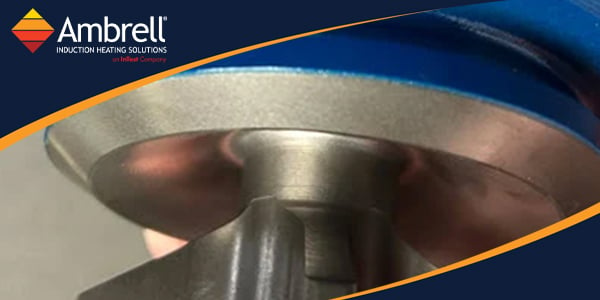
A manufacturer needed to cure adhesive on a steel valve seat used in hydraulic fracturing equipment. The process required heating the component to a temperature range of 225 to 245°F (115 to 118°C) while ensuring uniform results and avoiding damage to adjacent areas of the part. Other heating methods can introduce variability, leading to coating defects, inconsistent cure times, and reduced production efficiency.
The Induction Heating Solution
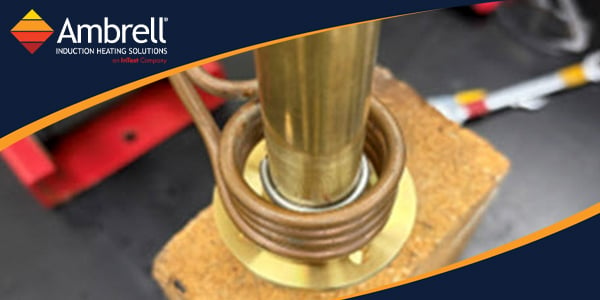
To meet the application requirements, Ambrell's Applications Lab, known as THE LAB at Ambrell, tested the process using an EASYHEAT 10 kW induction heating system operating at 170 kHz. A custom-designed, multiple-turn helical induction coil with a four-position configuration was developed specifically for the valve seat dimensions. Engineers optimized power delivery and heating patterns to achieve the target temperature range within the required production timeframe.
Because induction heating generates heat directly within the steel part, energy is delivered precisely where it is needed. This allows manufacturers to rapidly and accurately reach curing temperatures while reducing the risk of overheating surrounding material.
Results and Benefits
Testing demonstrated that induction heating could reliably cure the adhesive while maintaining precise temperature control. The process delivered several important advantages:
-
Precise heat placement for consistent adhesive curing.
-
Reduced coating and curing defects through accurate temperature control.
-
Repeatable results that support quality manufacturing and process consistency.
-
Fast, controllable heating that can be integrated into production environments.
Why Manufacturers Choose Induction for Adhesive Curing
Unlike ovens or open-flame heating methods, induction heating provides targeted, non-contact heat directly to the workpiece. The result is greater process control, improved energy efficiency, and shorter heating cycles. For adhesive curing applications, this translates to better product quality and more predictable manufacturing outcomes.
Whether curing adhesives, coatings, sealants, or bonding agents, induction heating enables manufacturers to achieve consistent results while minimizing scrap and rework.
Proven Solutions for Demanding Applications
Applications like this steel valve adhesive curing application demonstrate how induction heating can solve specialized manufacturing challenges in industries ranging from oil and gas to aerospace, automotive, and industrial equipment. By combining custom coil designs with precise power control, manufacturers can achieve reliable heating processes tailored to their unique production requirements.
At Ambrell, THE LAB performs complimentary induction heating viability testing to determine the best induction heating solution for your application, helping you validate performance before implementation. Looking for a better way to cure adhesives or coatings? Contact Ambrell to explore how induction heating can improve quality, consistency, and productivity in your manufacturing process.
More curing application notes