

 Curing Ceramic Fiber
 Curing Speaker Cone Epoxy
 Curing Measuring Tape Paint




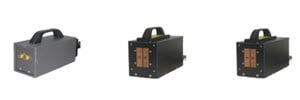


Benefits of induction curing
-
Meets tight production tolerances with precise localized heat to small areas creating pinpoint accuracy
-
Increases production rates with faster heating cycles
-
Reduces defect rates with repeatable, reliable heat
-
Eliminates variability from operator-to-operator, shift-to-shift
-
Maintains metallurgical characteristics of the individual metals
 Curing material on an aluminum mandrel
Heat a customer supplied aluminum cylinder to 80-120°C for a material curing application
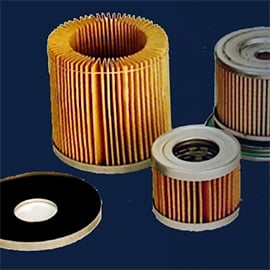
 Curing Oil Filters for Agricultural Equipment
To heat steel parts for a curing application; the end-product was an oil filter for agricultural equipment.
 Curing coatings; steel tube, aluminum block
The client's oven had a heating time of 20 minutes, so the time savings from a 90-second cycle are considerable. Additionally, induction is a repeatable process, unlike an oven and the induction system takes up less floor space than an oven.
 Curing plastisol adhesive, ends of filter assembly
Induction heating provides improved distribution of heat, much faster cure time than heat plates previously used, much faster production rate and hands-free heating that involves no operator skill for manufacturing
 Curing a coating; both sides aluminum piston
A three-turn channel coil 19 in (48.26 cm) long is used to anneal 4 pistons running though the coil with a distance of 6 in (15.24 cm) between centers.
 Curing epoxy on aluminum copier roller assembly
A four-turn helical pancake coil is used to heat the end of the copier roller assembly. The assembly is heated 90 seconds to cure the adhesive.
 Curing plastisol adhesive on an aluminum filter assembly
A four turn helical coil is used to cure the plastisol adhesive. One filter end cap is filled with adhesive, attached to the filter and heated 90 seconds to cure the adhesive.
 Curing ink on aluminum bottle caps
A double channel coil is used for the ink drying application. Fifteen bottle caps are placed inside the coil and power is applied for 3 seconds to dry the ink.
A special steel tube and coil combination is used to build an induction heating oven to cure the fiber on a continuous basis. The ceramic fiber travels in an alumina tube inside a hot steel tube
Induction heating provides minimized coating defects, repeatable results and faster production times
 Curing the Inside Liner of Baby Food Bottle Tops
A three turn oval pancake coil is used to cure the inside liner of a baby food bottle cap. The bottle cap travels through the coil at 25 per second to cure 500 caps per minute.
 Bonding Rear View Mirror Brackets to Windshield Glass
A unique four-over-four double wound pancake coil is used for the bonding application.
 Curing Adhesive on Steel Motor Shaft for Bonding
A complex two coil system, shield and stud systems used to provide proper axial alignments of the shaft & coil while allowing the fixture to be open for removal of the shaft.
The Ambrell 20kW output solid state induction power supply along with a unique 30 inch long multi turn helical coil was found to produce the following results.
 Heating Aluminum Auto Trim for Adhesive Curing
To heat various sizes of aluminum auto trim to 500 °F (260 °C) at a rate of 30 ft. (9.1m) per minute for curing an adhesive.
Curing Oil Filters for Agricultural Equipment
To heat steel parts for a curing application; the end-product was an oil filter for agricultural equipment.
Curing the Inside Liner of Baby Food Bottle Tops
A three turn oval pancake coil is used to cure the inside liner of a baby food bottle cap. The bottle cap travels through the coil at 25 per second to cure 500 caps per minute.
Bonding Rear View Mirror Brackets to Windshield Glass
A unique four-over-four double wound pancake coil is used for the bonding application.
Curing Adhesive on Steel Motor Shaft for Bonding
A complex two coil system, shield and stud systems used to provide proper axial alignments of the shaft & coil while allowing the fixture to be open for removal of the shaft.
The Ambrell 20kW output solid state induction power supply along with a unique 30 inch long multi turn helical coil was found to produce the following results.
Heating Aluminum Auto Trim for Adhesive Curing
To heat various sizes of aluminum auto trim to 500 °F (260 °C) at a rate of 30 ft. (9.1m) per minute for curing an adhesive.
Curing material on an aluminum mandrel
Heat a customer supplied aluminum cylinder to 80-120°C for a material curing application
Curing coatings; steel tube, aluminum block
The client's oven had a heating time of 20 minutes, so the time savings from a 90-second cycle are considerable. Additionally, induction is a repeatable process, unlike an oven and the induction system takes up less floor space than an oven.
Curing a coating; both sides aluminum piston
A three-turn channel coil 19 in (48.26 cm) long is used to anneal 4 pistons running though the coil with a distance of 6 in (15.24 cm) between centers.
Curing epoxy on aluminum copier roller assembly
A four-turn helical pancake coil is used to heat the end of the copier roller assembly. The assembly is heated 90 seconds to cure the adhesive.
Curing plastisol adhesive on an aluminum filter assembly
A four turn helical coil is used to cure the plastisol adhesive. One filter end cap is filled with adhesive, attached to the filter and heated 90 seconds to cure the adhesive.
Curing ink on aluminum bottle caps
A double channel coil is used for the ink drying application. Fifteen bottle caps are placed inside the coil and power is applied for 3 seconds to dry the ink.



AMBRELL CORPORATION
1655 Lyell Avenue
Rochester, NY 14606
United States
 Directions
T: +1 585 889 9000
F: +1 585 889 4030
Contact Sales
Contact Orders
Contact Service
AMBRELL B.V.
Holtersweg 1
7556 BS Hengelo
The Netherlands
Directions
T: +31 880 150 100
F: +31 546 788 154
Contact Sales
Contact Orders
Contact Service
AMBRELL Ltd.
Front Suite, 1st Floor, Charles House
148-149 Gt Charles Street
Birmingham, B3 3HT
United Kingdom
T: +44 1242 514042
F: +31 546 788 154
Contact Sales
Contact Orders
Contact Service