Ambrell to Exhibit at Three Manufacturing Tradeshows Next Week
Next week, Ambrell will be exhibiting at three leading industry events spanning North America and Europe. Whether you're exploring new production...


Brazing threaded bulkhead fittings can be a challenging process—especially when consistency, joint integrity, and repeatability are critical. In a recent application test, THE LAB at Ambrell demonstrates how induction heating provides a precise, efficient solution for achieving high-quality brazed joints in this type of assembly.
Bulkhead fittings are widely used to create secure, leak-proof connections through panels, tanks, or housings. These assemblies typically involve threaded components that must maintain tight tolerances and structural integrity after joining.
Traditional brazing methods, such as torch heating, often introduce variability. Uneven heat distribution, risk of overheating and damaging threads, inconsistent joint quality, and dependance on operator skill are among the issues. These issues can be costly and lead to rework, scrap, or field failures.
To overcome these challenges, THE LAB leveraged induction heating, a process that uses electromagnetic energy to generate heat directly within the workpiece.
Unlike flame-based methods, induction heating delivers:
Localized, controlled heat at the joint
Repeatable results from part to part
Non-contact heating, eliminating open flames
Because the heat is generated precisely where it is needed, adjacent areas—such as threads or surrounding components—aren't impacted.
In this application, the goal was to braze a threaded bulkhead fitting assembly using a controlled, repeatable process.
Key elements of the induction setup included:
A custom-designed induction coil to focus energy on the joint area
Application of flux and brazing alloy to promote proper wetting and flow
Controlled heating to bring the joint to the required brazing temperature
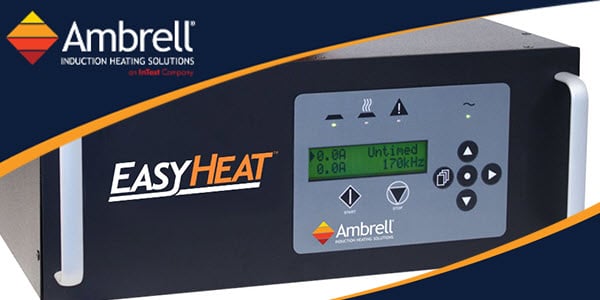
Heat was generated rapidly in the fitting by an Ambrell EASYHEAT 10 kW induction heating system. The brazing alloy melted and flowed into the joint through capillary action, forming a strong bond without melting the base materials.
The induction brazing process delivered several key advantages:
Consistent, High-Quality Joints
Protection of Threaded Features
Faster Heating and Improved Throughput
Bulkhead fittings demand precision and reliability—any defect in the joint can compromise the seal. Precise heating with superior repeatability during this application led to strong, low-stress joints. This makes induction an ideal fit for this process.
Interested in testing your brazing application? Ambrell offers free applications/feasibility testing from THE LAB.

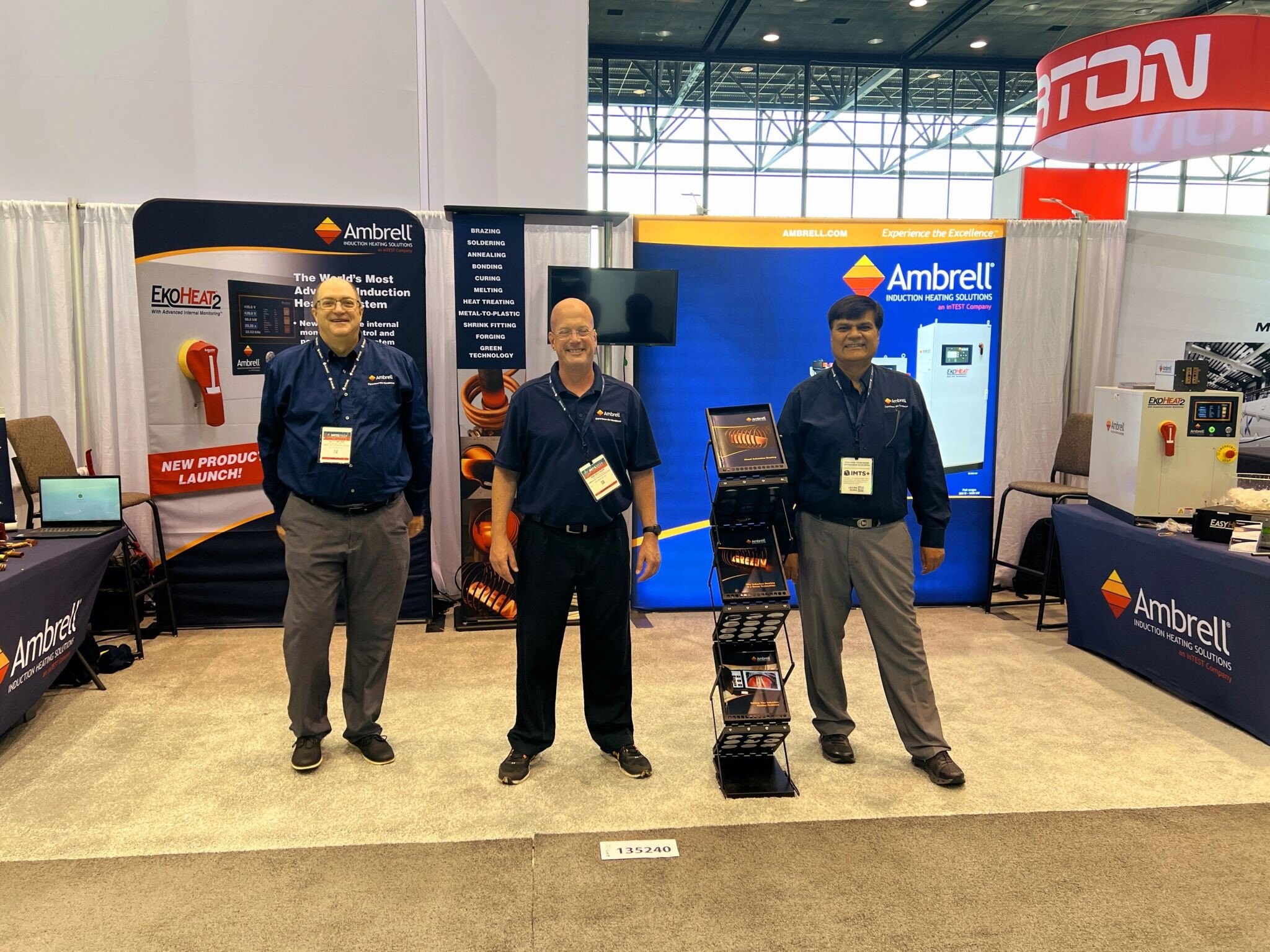
Next week, Ambrell will be exhibiting at three leading industry events spanning North America and Europe. Whether you're exploring new production...
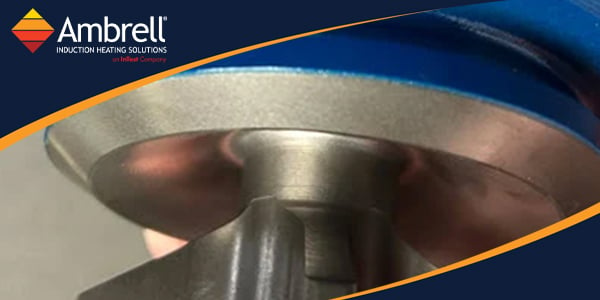
In the oil and gas industry, component reliability is critical. Fracking equipment operates in demanding environments where even minor manufacturing...
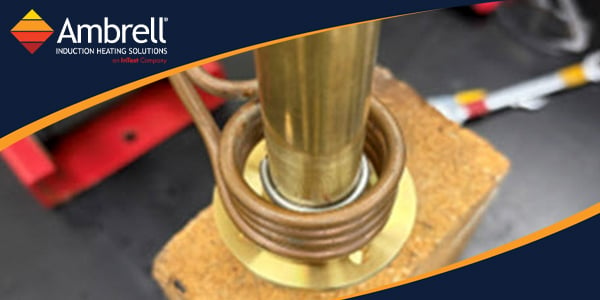
In antenna manufacturing, soldering quality is crucial. Poorly controlled heat can lead to inconsistent joints, unnecessary rework, and potential...