As manufacturers pursue electrification given the many initiatives across the globe such as the EU Electrification Action Plan, the question becomes: How can we replace fossil‑fuel‑based heating processes without sacrificing performance, throughput, or quality?
For many applications, induction heating can be the answer.
Electrification isn’t just about swapping energy sources—it’s about adopting technologies that are efficient, controllable, scalable, and ready for a lower‑carbon future. Induction heating checks all of those boxes and is increasingly recognized as a key technology supporting electrified manufacturing.
Electrification in Manufacturing: The Bigger Picture
Industrial process heating accounts for a significant portion of manufacturing energy use, and traditionally, much of that energy has come from natural gas, propane, or oil‑fired systems. Electrification initiatives aim to shift those processes to electricity—ideally paired with renewable energy sources—to reduce emissions, improve efficiency, and future‑proof operations against tightening regulations.
But not all electric heating methods are created equal.
Resistance heaters, ovens, and furnaces often struggle with slow ramp rates, uneven heating, excessive heat loss, and inefficient energy use. This is where induction heating offers an advantage.
Direct, Efficient Use of Electrical Energy
Induction heating converts electrical energy directly into heat inside the part itself, rather than heating air, refractory material, or large oven chambers. By inducing current within electrically conductive materials, heat is generated precisely where it’s needed.
This efficiency offers several electrification advantages:
-
Higher energy utilization compared to gas-fired or convection-based systems
-
Minimal standby losses, since systems heat only when energized
-
Reduced facility heat load, lowering HVAC demands
For manufacturers pursuing electrification, this localized, on-demand heating aligns perfectly with efficiency goals.
Eliminating Combustion From the Process
One of the most immediate benefits of induction heating in an electrification initiative is that it removes combustion entirely from the heating process. There are no flames, exhaust gases, or fuel handling infrastructure.
By eliminating burners and associated emissions, manufacturers can simplify compliance with environmental and safety regulations while improving shop‑floor conditions. This becomes especially valuable in applications such as brazing, soldering, annealing, heat treating, and shrink fitting—processes that have traditionally relied on gas-fired systems.
Precision Control Enables Smarter Energy Use
Electrification isn’t just about cleaner energy—it’s also about smarter energy.
Induction heating systems offer control over power, frequency, and heating profiles, allowing manufacturers to deliver exactly the amount of heat required for the process.
Benefits include:
When paired with modern controls, induction systems integrate well into digital manufacturing strategies, enabling energy monitoring, data logging, and optimization as part of a broader electrification roadmap.
Compatibility With Renewable Energy Sources
As more facilities incorporate on-site solar, wind, or renewable electricity procurement, electrified processes become even more attractive. Induction heating systems run entirely on electricity, so they can leverage these renewable energy sources.
While combustion-based systems remain tied to fossil fuels, induction heating allows manufacturers to directly benefit as their electrical supply becomes cleaner over time—without needing major process changes.
Scalable Across Applications and Industries
Electrification initiatives rarely happen all at once. They’re often phased in—process by process, line by line.
Induction heating supports this approach by offering scalable solutions across a wide range of power levels and applications, from small, benchtop systems to large, high-power industrial installations. Manufacturers can start by electrifying a single process and expand as goals, budgets, and infrastructure evolve.
Induction Heating as a Strategic Electrification Tool
For manufacturers pursuing an electrification initiative, induction can be an important part of their strategy.
By combining electrical efficiency, process precision, operational flexibility, and compatibility with renewable energy, induction heating helps bridge the gap between today’s production demands and tomorrow’s sustainability goals.
Electrification doesn’t have to mean compromise. With induction heating, manufacturers can move toward a cleaner, more efficient future—while maintaining performance, quality, and throughput.
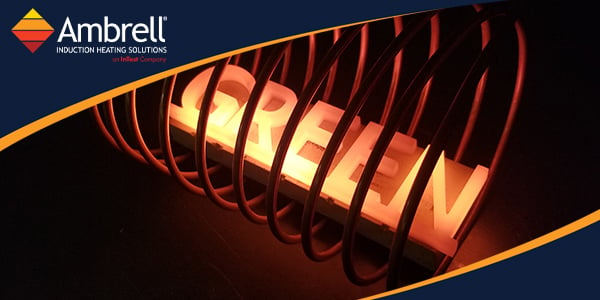
Learn more about how induction heating is a green technology, and check out our energy and utility savings calculator, on our website.