Ambrell to Exhibit at Three Manufacturing Tradeshows Next Week
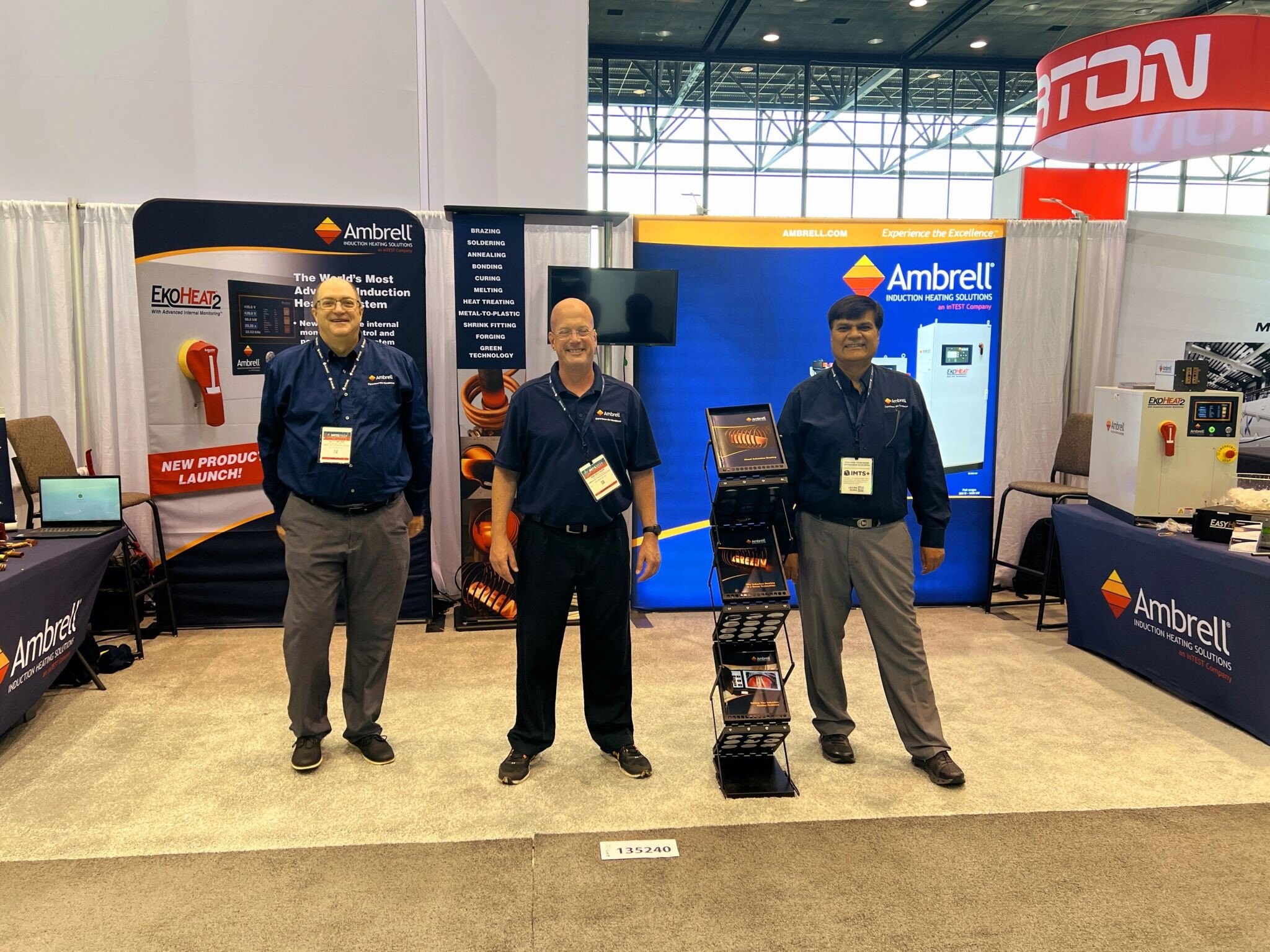
Next week, Ambrell will be exhibiting at three leading industry events spanning North America and Europe. Whether you're exploring new production...


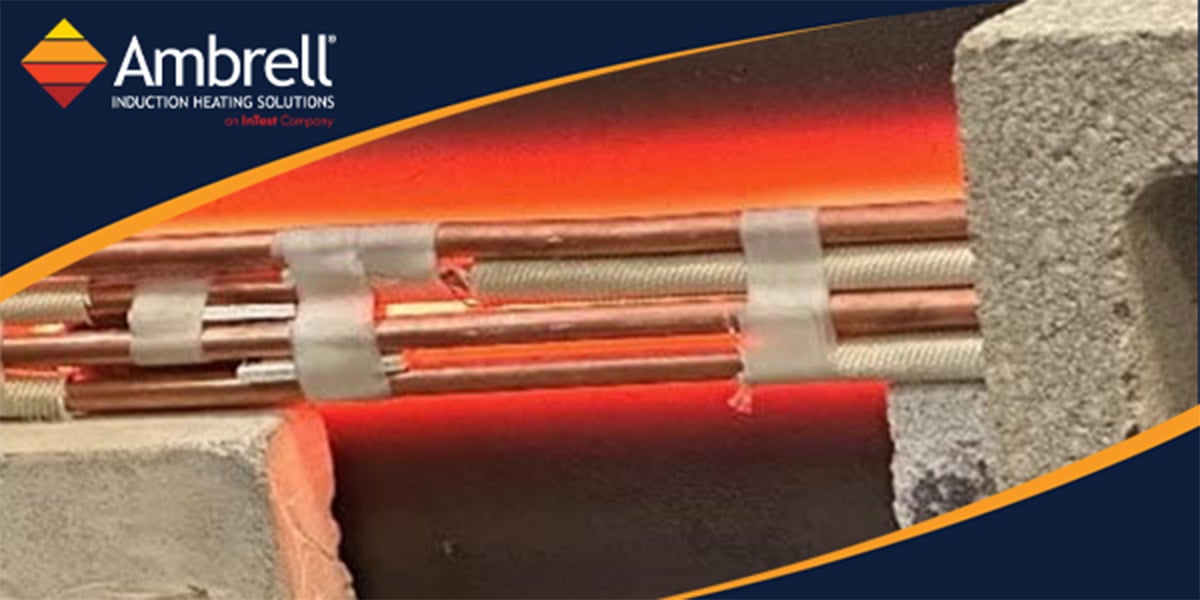
Bending thick steel plates is a demanding forming operation. Without proper temperature control, manufacturers risk cracking, inconsistent bends, and tool wear. One proven way to reduce these issues is preheating steel plates prior to bending—and induction heating offers a fast, controlled, and repeatable solution.
In this application, THE LAB at Ambrell demonstrated how induction heating can be used to efficiently preheat steel tower components before bending, delivering uniform heat and consistent results while reducing the manufacturer's overall processing time.
Steel plates ranging from 0.25 to 1.25 inches (6–32 mm) thick require substantial force to bend at ambient temperature. Cold bending can lead to high stress concentrations, spring-back, and an increased likelihood of surface or internal cracking—especially in structural components such as tower parts.
Preheating the steel prior to bending lowers yield strength, allowing the material to deform more easily and predictably. The key is applying heat quickly, uniformly, and without altering the metallurgical properties of the steel.
THE LAB's objective was to preheat steel tower parts to a target temperature of 1,740°F (950°C) prior to bending. The test setup used an Ambrell EKOHEAT® 250 kW induction heating system, operating at 13 kHz, and was equipped with a remote heat station containing multiple capacitors to deliver the required power efficiently.
A custom-designed helical induction coil was developed specifically for this application. Multiple test iterations were conducted to optimize coil geometry, power delivery, and heating patterns across the steel plates, ensuring repeatable and uniform temperature results.
After refining the coil setup, the induction heating process produced consistent, controlled results suitable for this preheating for bending application. Key outcomes included:
Uniform temperature distribution across various plate thicknesses
Repeatable performance from part to part
Faster heating cycles compared to conventional methods
Non-contact heating, eliminating surface contamination
By preheating the steel immediately before bending, manufacturers can improve bend quality while reducing mechanical stress on forming equipment.
Ambrell’s application testing demonstrated how induction heating can successfully preheat steel plates prior to bending—improving forming efficiency while maintaining precise temperature control. Whether you’re working with thin plate or heavy structural steel, induction heating can be tailored to your specific material, geometry, and production requirements.
Ambrell offers free application testing through THE LAB at Ambrell, allowing manufacturers to validate induction heating processes before committing to production equipment. If you have an application that might benefit from induction heating, be sure to take advantage of complimentary application testing from THE LAB.

Next week, Ambrell will be exhibiting at three leading industry events spanning North America and Europe. Whether you're exploring new production...
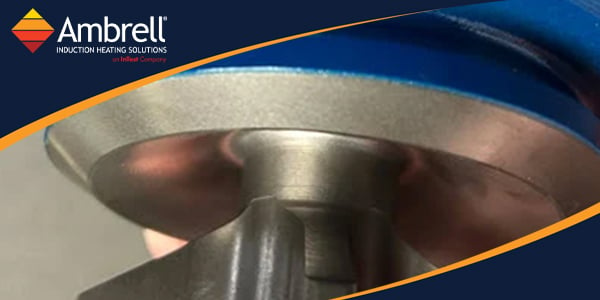
In the oil and gas industry, component reliability is critical. Fracking equipment operates in demanding environments where even minor manufacturing...
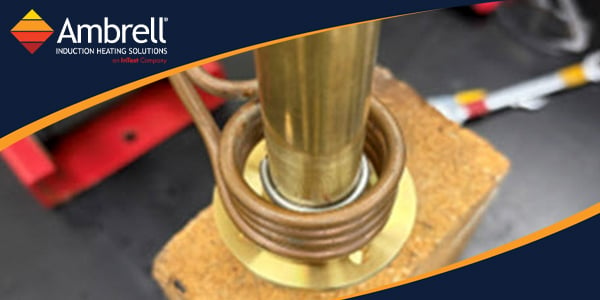
In antenna manufacturing, soldering quality is crucial. Poorly controlled heat can lead to inconsistent joints, unnecessary rework, and potential...