Ambrell to Exhibit at Three Manufacturing Tradeshows Next Week
Next week, Ambrell will be exhibiting at three leading industry events spanning North America and Europe. Whether you're exploring new production...


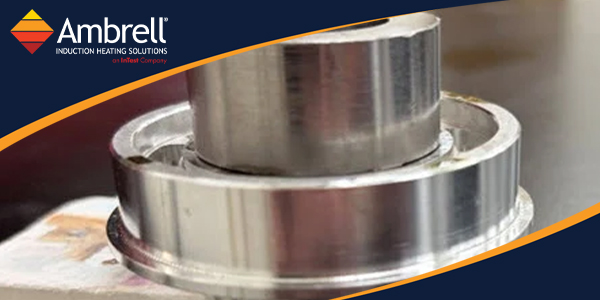
Manufacturers are seeking speed, repeatability and efficiency from their manufacturing processes. An example of this involved shrink-fitting a steel actuator onto an aluminum shaft for an automotive actuator application. Through testing in THE LAB at Ambrell, induction heating proved to be an effective solution that delivered precise, repeatable results while supporting their volume production requirements.
The objective was to shrink-fit a steel actuator to an aluminum shaft by heating the steel component to approximately 350 °F (180 °C). The process required uniform heating, accurate temperature control, and a method that could be easily integrated into their manufacturing process.
Traditional heating methods often introduce unnecessary heat into surrounding areas, increase cycle times, and make process consistency more difficult to achieve. For automotive applications, maintaining repeatability and part quality is particularly critical.
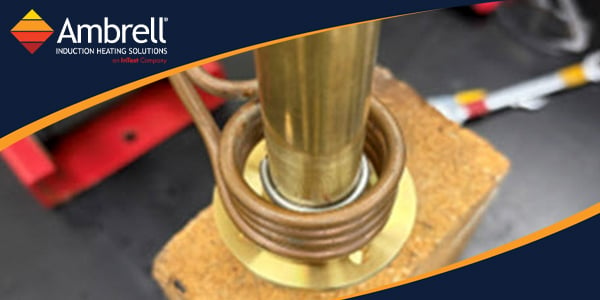
To evaluate the application, Ambrell used a 10 kW EASYHEAT induction heating system operating at 305 kHz. The system was equipped with a remote workhead containing two 1.5 μF capacitors. A custom-designed multi-turn pancake coil was developed specifically for this application.
Initial testing focused on optimizing power delivery and achieving the desired heat pattern. Once the appropriate heating profile was established, multiple test runs were conducted to verify process consistency and performance for the client.
Induction heating offers several advantages for shrink-fitting applications:
Because induction generates heat directly within the workpiece, manufacturers can precisely control temperature and heating time. This results in consistent expansion of the steel actuator and reliable assembly outcomes.
By delivering energy directly to the component being heated, induction significantly reduces heating times compared to other heating methods. Faster heating translates into improved throughput and increased productivity.
The custom pancake coil produced an even heating pattern across the steel actuator, helping ensure predictable thermal expansion and a dependable shrink-fit process.
Induction systems can be incorporated into automated manufacturing cells with minimal floor space requirements, especially when the remote workhead is considered. Their compact design and controllable heating cycles make them well suited for automotive assembly operations.
Unlike ovens that heat large volumes of air and surrounding equipment, induction concentrates energy where it is needed. This more targeted approach reduces energy consumption and operating costs.
The process can be automated and standardized, providing hands-free heating that does not rely heavily on operator skill. This improves consistency while reducing the likelihood of process variation.
Testing confirmed that induction heating is a practical and highly effective solution for shrink-fitting a steel actuator to an aluminum shaft. The combination of precise temperature control, rapid heating, energy efficiency, and automation-friendly operation makes induction an attractive option for automotive manufacturers looking to improve assembly processes.
As shown in this application tested by THE LAB, induction heating continues to provide manufacturers with a reliable alternative to conventional heating methods, helping reduce cycle times while maintaining the quality and repeatability required in today’s production environments.
THE LAB at Ambrell has significant experience with shrink fitting applications. To learn more about free application testing, visit our page about THE LAB to get started.
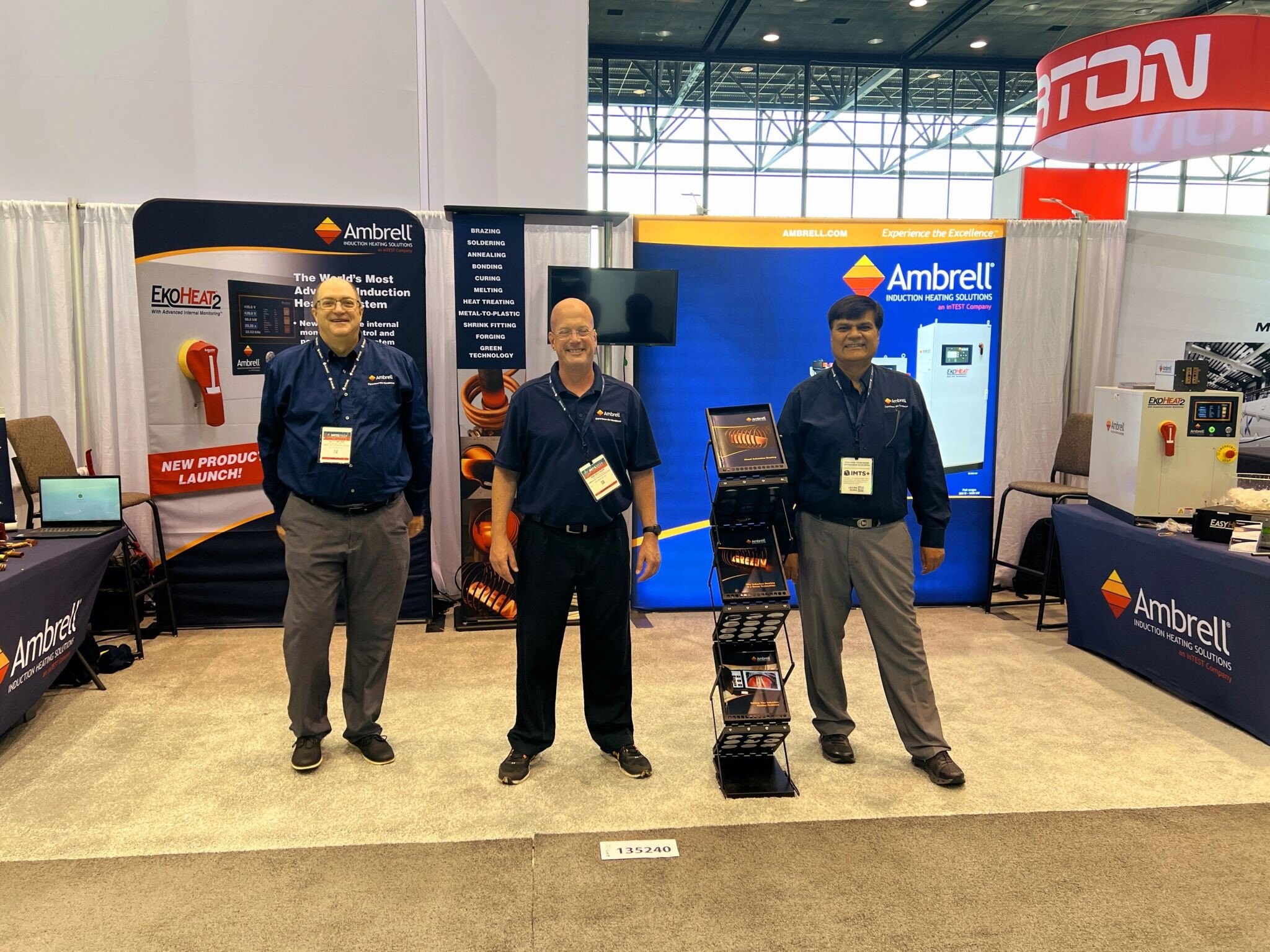
Next week, Ambrell will be exhibiting at three leading industry events spanning North America and Europe. Whether you're exploring new production...
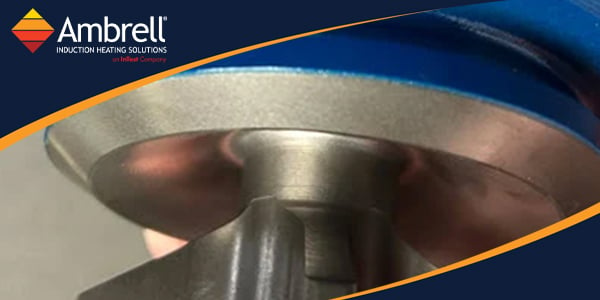
In the oil and gas industry, component reliability is critical. Fracking equipment operates in demanding environments where even minor manufacturing...
In antenna manufacturing, soldering quality is crucial. Poorly controlled heat can lead to inconsistent joints, unnecessary rework, and potential...