Induction Heating Steel Valve and Flange Assemblies
Objective Large steel valves and flange assemblies are critical components in many industrial systems, but heating them efficiently for assembly,...


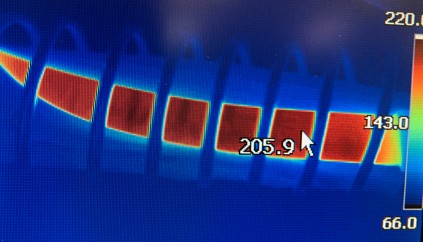
A client in the food processing industry had been using an alternative method for knife heating, but wanted to consider induction because it's fast and comparatively safe. Consequently, they turned to THE LAB at Ambrell to assess the viability of their application.
THE LAB determined that an EASYHEAT™ 1.2 kW, 150-400 kHz induction heating system with a custom-designed single position multiple-turn helical coil would be the right solution for their application. An infrared camera was used to measure the temperature of the knife blade during the testing process.
With the EASYHEAT 1.2 kW power supply, it was observed that it took just over 20-25 seconds to heat the blade to 200 °F (93 °C), meeting the client’s objective. The speed of heating, induction's repeatability (same heating time and result every time), and the prospect of a safer work environment were the key benefits to the client.
To read other heating application notes from THE LAB at Ambrell, visit our heating applications page.

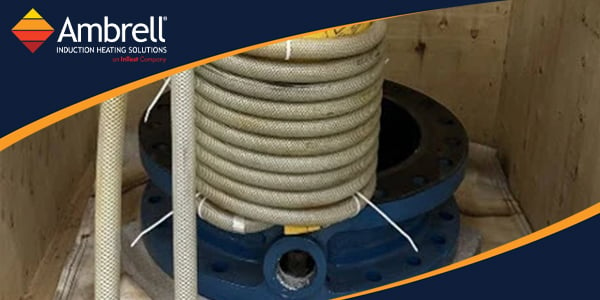
Objective Large steel valves and flange assemblies are critical components in many industrial systems, but heating them efficiently for assembly,...
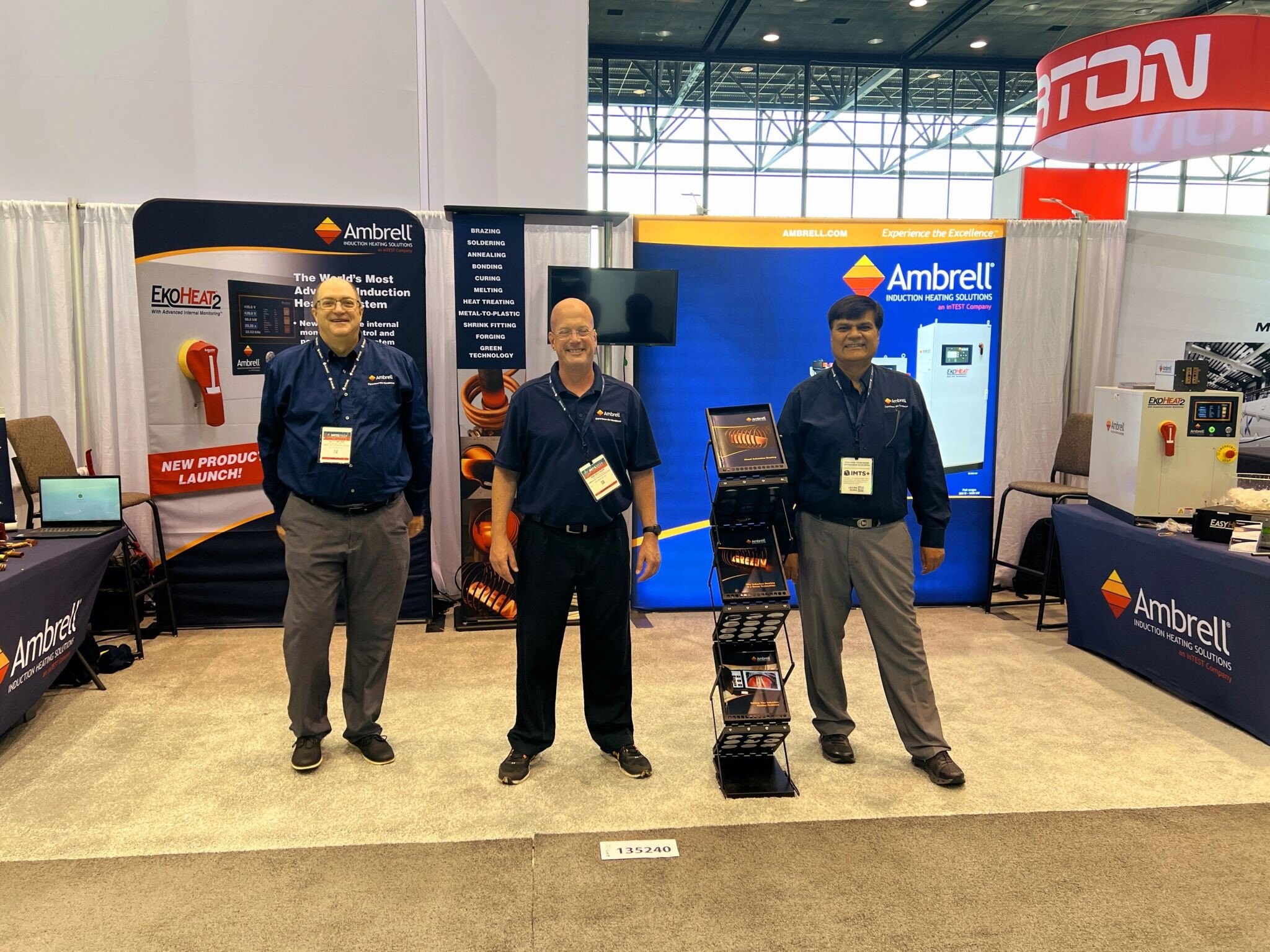
Next week, Ambrell will be exhibiting at three leading industry events spanning North America and Europe. Whether you're exploring new production...
In the oil and gas industry, component reliability is critical. Fracking equipment operates in demanding environments where even minor manufacturing...