Induction Heating Steel Valve and Flange Assemblies
Objective Large steel valves and flange assemblies are critical components in many industrial systems, but heating them efficiently for assembly,...


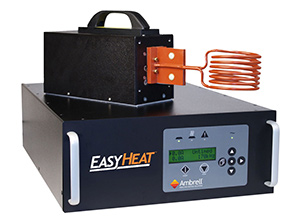
Plastisol, a popular coating, relies on precise curing temperatures to achieve optimal results. Traditional methods like convection ovens can be inefficient, leading many companies to switch to induction heating.
Let's delve into why you should consider making the switch to induction for plastisol curing:
Induction heating works by generating heat directly within the plastisol itself, using electromagnetic fields. This targeted approach eliminates the need to heat up an entire oven, resulting in significantly faster curing times.
Induction heating provides pinpoint accuracy when it comes to temperature control. This is crucial for plastisol, as overheating can lead to burning, cracking, or off-gassing. With induction, you get consistent, repeatable results, minimizing defects and ensuring a high-quality finish every time.
Since induction heating focuses its energy directly on the plastisol, there's minimal heat wasted on heating surrounding air. This translates to significant energy savings compared to traditional convection ovens.
Convection ovens can generate a lot of heat, making the work environment uncomfortable. Induction systems operate at a much lower overall temperature, creating a safer and more pleasant workspace.
Induction heating ensures consistent heat distribution throughout the plastisol, eliminating the possibility of hot and cold spots. This leads to a more uniform cure, enhancing the overall quality and durability of your finished product.
Induction curing systems are generally more compact than convection ovens. This frees up valuable floor space in your production facility.
Induction heating systems can be easily scaled up or down to meet your specific production needs. Additionally, they can be adapted to cure a variety of shapes and sizes, making them a highly versatile option.
Induction systems have a simpler design with fewer moving parts compared to convection ovens. This translates to less maintenance and a lower risk of breakdowns.
While there is an initial investment associated with induction heating systems, the long-term benefits are considerable. Induction heating offers a faster, more efficient, and more cost-effective way to cure plastisol, resulting in higher quality products and a safer work environment. Ambrell offers free applications testing from THE LAB, so test your application and see if induction heating could be a fit for your process.

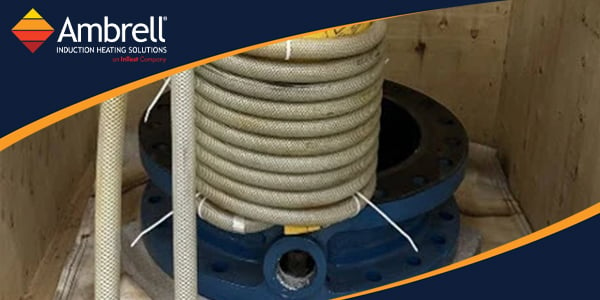
Objective Large steel valves and flange assemblies are critical components in many industrial systems, but heating them efficiently for assembly,...
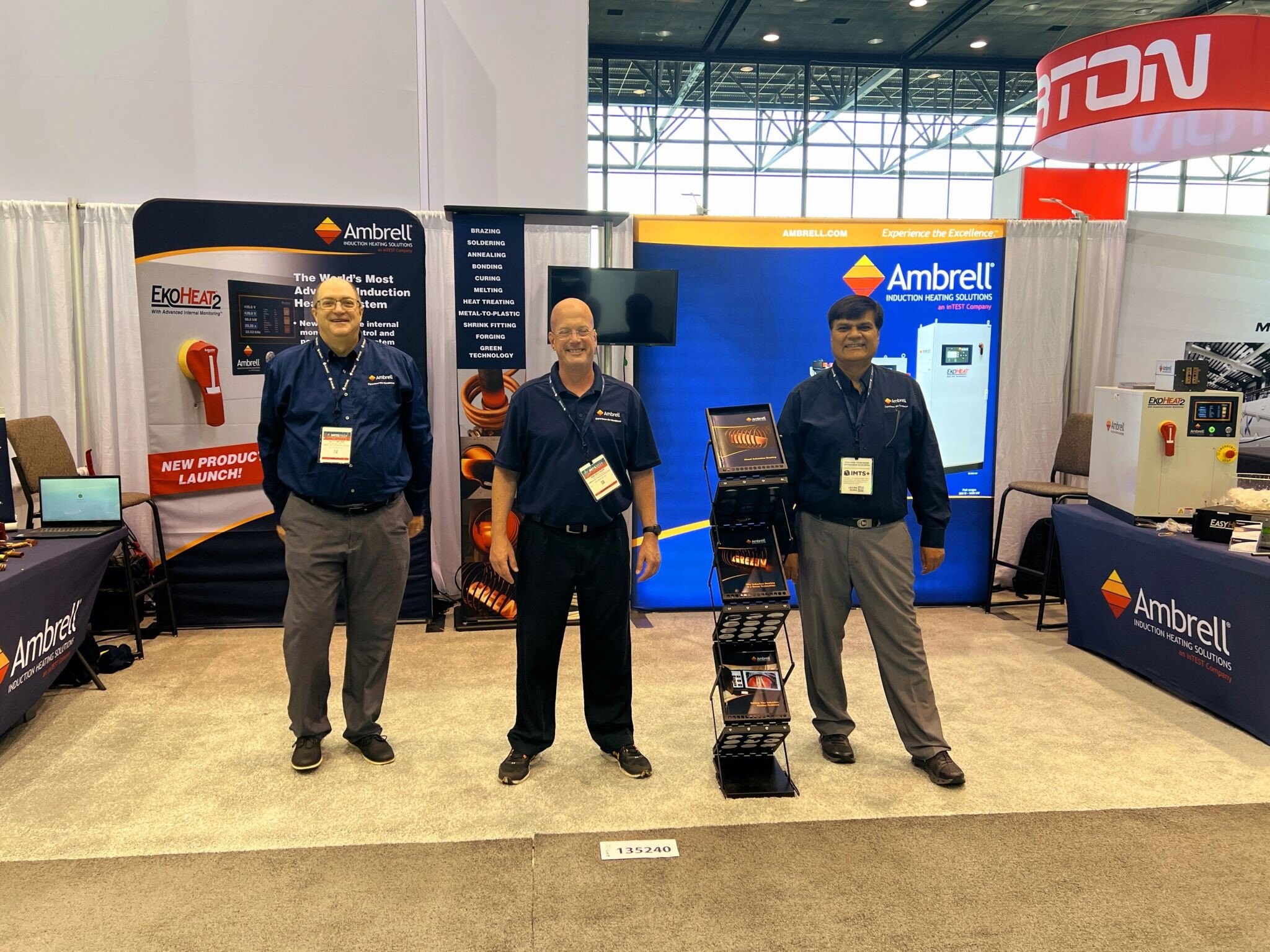
Next week, Ambrell will be exhibiting at three leading industry events spanning North America and Europe. Whether you're exploring new production...
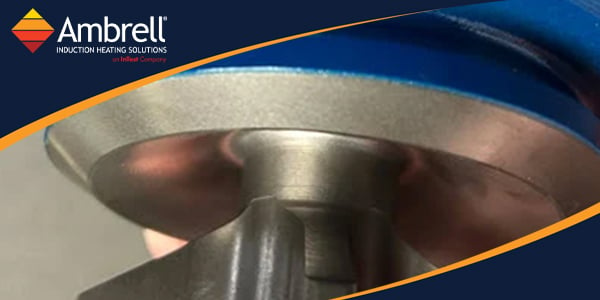
In the oil and gas industry, component reliability is critical. Fracking equipment operates in demanding environments where even minor manufacturing...