Induction Heating Steel Valve and Flange Assemblies
Objective Large steel valves and flange assemblies are critical components in many industrial systems, but heating them efficiently for assembly,...


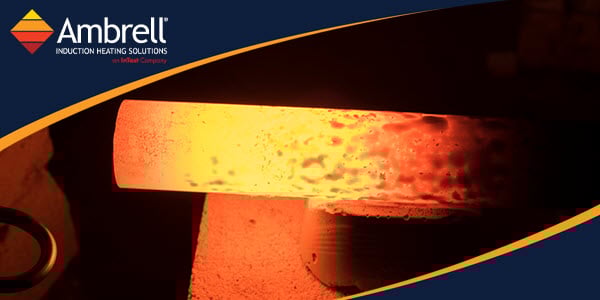
Forging tool manufacturers increasingly demand process control, consistency, and throughput. Induction heating can help them achieve those objectives. In this application test from THE LAB at Ambrell, induction heating is used to preheat steel bars prior to forging, delivering fast, repeatable results while reducing energy waste and operator variability.
In this preheating for forging application, material must reach forging temperature quickly and uniformly without overheating surrounding areas or introducing variability between parts. Traditional heating methods can struggle to deliver the combination of speed, precision, and repeatability required for this type of application.
To meet the client’s requirements, THE LAB at Ambrell tested an EKOHEAT 200 kW induction heating system equipped with a remote workhead. The system was configured specifically for heating customer‑supplied steel bars used in forging tool production.
Key application details included:
Steel rods (~1 in / 2.5 cm diameter)
Up to 2,000 °F (1,093 °C)
Approximately 8.6 kHz
Custom‑designed induction channel coil to heat multiple samples consistently
Extensive testing and coil iterations were conducted to optimize heating patterns, power delivery, and repeatability before final application data was collected.
Application testing demonstrated several advantages of using induction heating for preheating prior to forging:
Induction heating met the customer’s demanding cycle time requirements and proved significantly faster than conventional heating methods, supporting higher throughput.
Energy was applied exactly where needed, minimizing temperature variation and avoiding unnecessary heating of surrounding material. This precise control supports improved forging consistency and part quality.
Because induction heating is not dependent on operator skill, the process delivers the same result in the same amount of time, every cycle, improving process stability.
By focusing heat only on the steel being forged, induction heating reduces wasted energy and helps manufacturers operate more efficiently.
Ambrell offers free application testing through THE LAB at Ambrell, allowing manufacturers to validate induction heating processes before committing to production equipment. If you have an application that might benefit from induction heating, be sure to take advantage of complimentary application testing from THE LAB.
Visit our induction forging applications page to review other forging application notes from THE LAB at Ambrell.

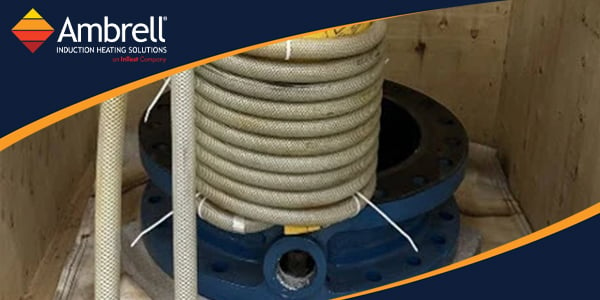
Objective Large steel valves and flange assemblies are critical components in many industrial systems, but heating them efficiently for assembly,...
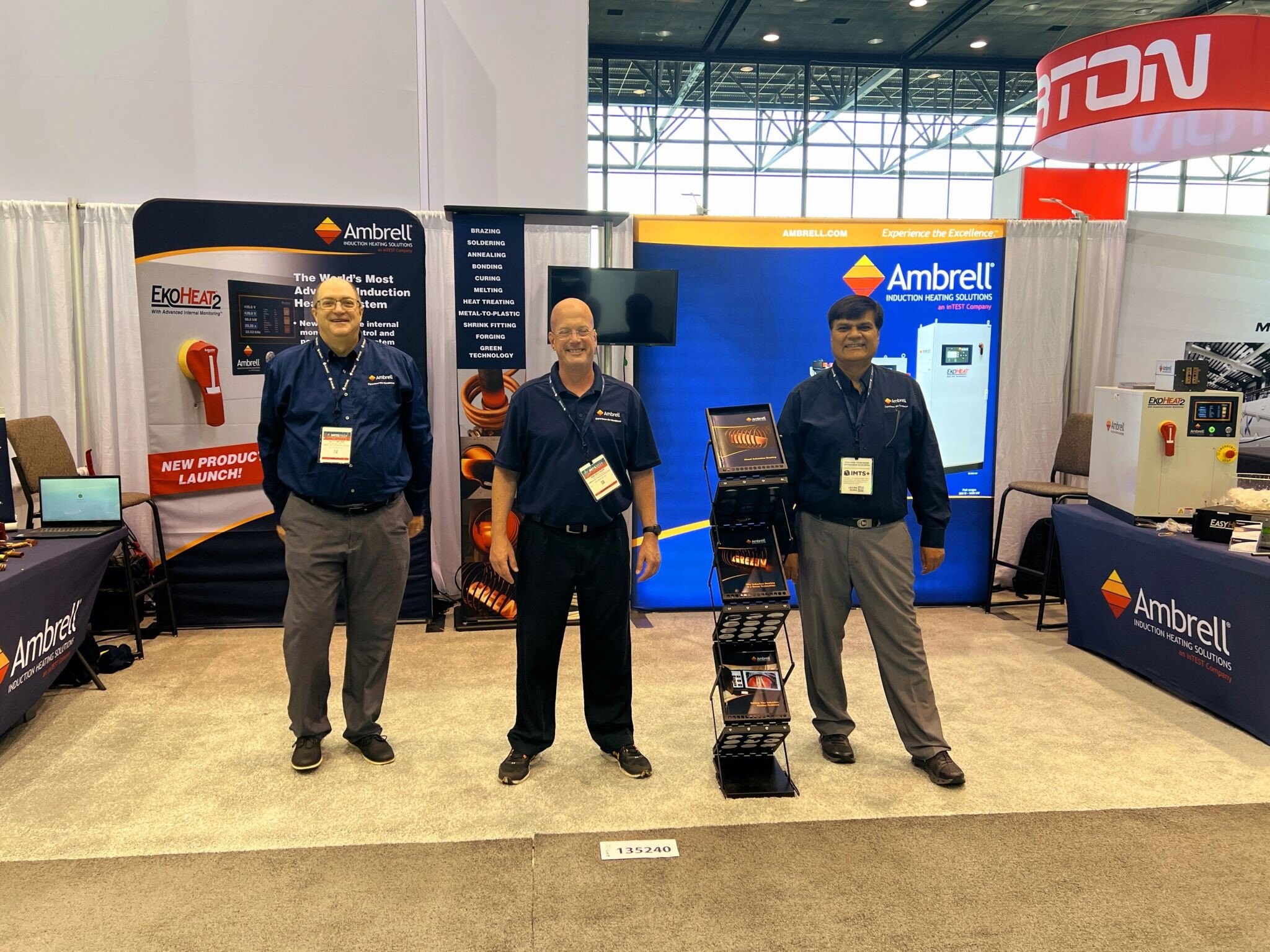
Next week, Ambrell will be exhibiting at three leading industry events spanning North America and Europe. Whether you're exploring new production...
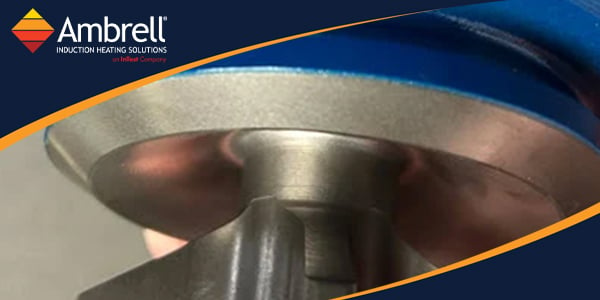
In the oil and gas industry, component reliability is critical. Fracking equipment operates in demanding environments where even minor manufacturing...