In defense manufacturing, there is little margin for error. Components must meet exacting specifications, perform reliably in extreme environments, and be produced with absolute consistency. From aircraft systems and naval hardware to ground vehicles and advanced electronics, manufacturers are under constant pressure to improve quality while reducing risk, waste, and production time.
One technology that has become increasingly used to help meet these demands is induction heating. Long used in aerospace, induction heating is now a critical enabling technology across defense manufacturing—supporting everything from brazing and heat treatment to forming, bonding, and heat staking. Its combination of precision, efficiency, and repeatability makes it particularly well‑suited for defense applications where performance and traceability are absolutely critical.
What Is Induction Heating?
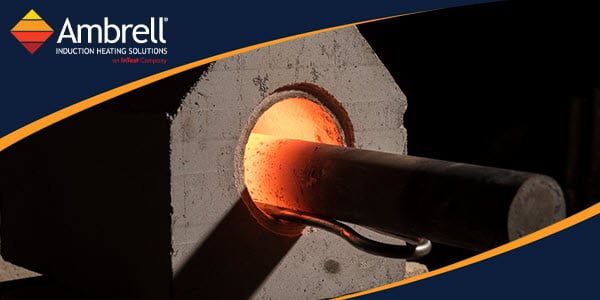
Induction heating is a non‑contact heating process that uses electromagnetic fields to generate heat directly within electrically conductive materials. When a metal component is placed inside an alternating magnetic field, electrical currents are induced in the part, producing heat through resistance. Because the heat is generated internally rather than transferred from an external source, the process is fast, controllable, and highly localized.
Unlike furnaces, torches, or resistance heating, induction heating delivers energy exactly where it’s needed—without open flames, long warm‑up times, or unnecessary heating of surrounding areas.
Where Induction Heating Is Used in Defense Manufacturing
Defense manufacturers use induction heating across a wide range of applications, many of which demand tight tolerances and repeatable outcomes.
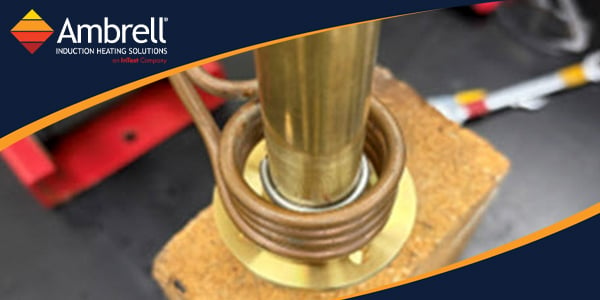
Brazing and soldering
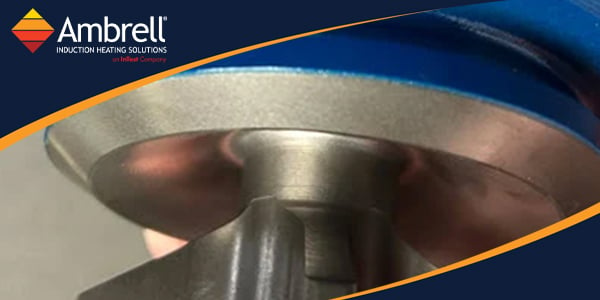
are among the most common uses. Induction heating enables precise, uniform heating of joints for components such as sensors, probes, fuel lines, and gas nozzles. Because the heat is localized, surrounding materials are protected, reducing distortion and rework.
Heat treatment and hardening
applications include landing gear components, turbine blades, engine parts, fasteners, and structural elements. Induction heating allows manufacturers to selectively heat specific zones, improving hardness, fatigue resistance, and durability without compromising dimensional accuracy.
Preheating and post‑weld stress relief
are also widely used in defense and aerospace environments. Controlled induction heating improves weld quality and helps reduce internal stresses in high‑value alloys such as titanium, Inconel, and specialty steels.
Additional applications include forming and forging, shrink fitting, curing of coatings and adhesives, annealing of ammunition casings, and bonding of composite materials—each benefiting from the process control and consistency induction heating provides.
Key Benefits of Induction Heating for Defense Manufacturers
Precision
Defense components often require heating in specific zones while leaving adjacent areas untouched. Induction heating can meet this requirement, allowing manufacturers to precisely control the location, depth, and duration of heat. This precision is critical for maintaining tight tolerances and meeting military and aerospace specifications.
Repeatability and Process Consistency
Consistency is essential in defense manufacturing, particularly for programs that require documented, repeatable processes. Induction heating is inherently repeatable, producing the same thermal profile cycle after cycle. This makes it easier to validate processes, meet quality standards, and support compliance and traceability requirements.
Faster Production Cycles
Because induction heating delivers energy directly into the part, heating times are significantly shorter than with furnaces or ovens. Rapid heat‑up and instant on/off capability help reduce cycle times, improve throughput, and support lean manufacturing initiatives—without sacrificing quality.
Cleaner and Safer Operations
Induction heating is a clean, flameless process. It produces no combustion gases, fumes, or smoke, making it well‑suited for clean manufacturing environments and enclosed facilities. The absence of open flames and hot surfaces also improves operator safety and reduces fire risk, an important consideration in defense plants.
Energy Efficiency and Sustainability
Induction heating converts a high percentage of electrical energy directly into usable heat within the part, making it far more efficient than many conventional heating methods. For defense manufacturers facing rising energy costs and increasing sustainability requirements, this efficiency translates into lower operating costs and reduced environmental impact.
Why Induction Heating Is a Strategic Fit for Defense Programs
Defense programs often involve long production runs, high‑value materials, and strict quality assurance requirements. Induction heating aligns well with these realities by offering controllable, scalable, and reliable thermal processing. Whether used in prototyping, low‑volume specialty work, or full‑rate production, the technology delivers the control and confidence necessary.
As defense platforms become more advanced and materials more specialized, the ability to apply heat precisely and repeatably will only grow in importance. Induction heating is no longer just an alternative to traditional methods—it is increasingly the preferred solution for manufacturers focused on performance, safety, and long‑term reliability.
Looking Ahead
From aerospace systems to ground and naval platforms, induction heating continues to play a growing role in defense manufacturing. Its unique combination of precision, efficiency, and process control makes it a powerful tool for meeting today’s demanding requirements while preparing for the next generation of defense technologies.
For manufacturers seeking to improve quality, reduce risk, and modernize their production processes, induction heating offers a proven path forward.
Want to see how induction is used in aerodef applications? Download our Aerospace and Defense brochure.