Ambrell to Exhibit at Three Manufacturing Tradeshows Next Week
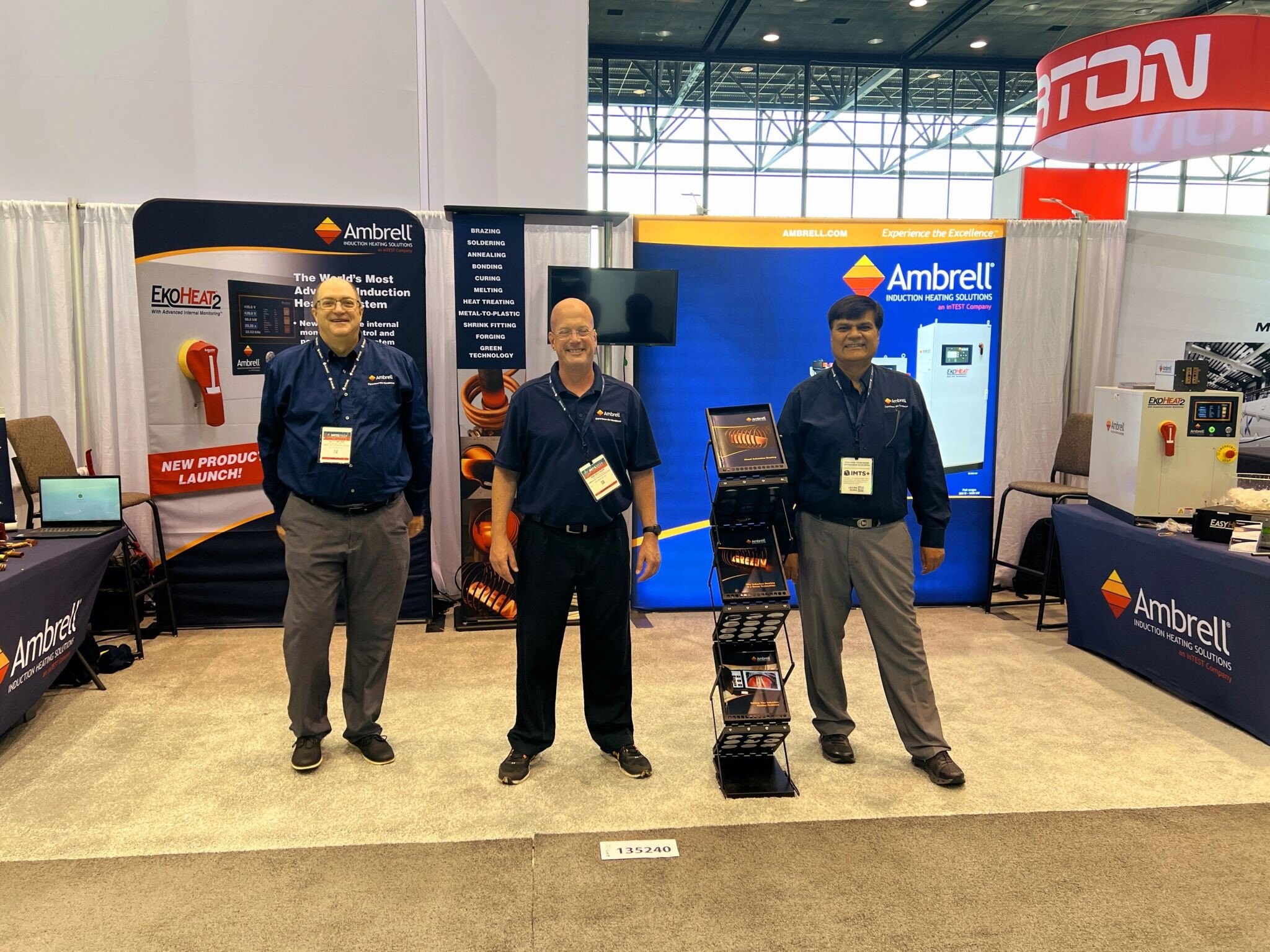
Next week, Ambrell will be exhibiting at three leading industry events spanning North America and Europe. Whether you're exploring new production...


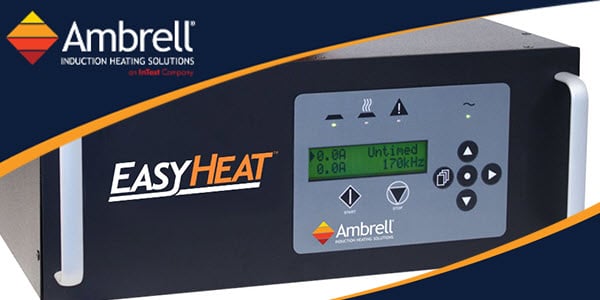
Removing rubber that has been permanently bonded to steel or other ferrous substrates can be a challenging and time consuming process. Traditional methods often rely on mechanical force, flame heating, or chemical treatments, each of which can introduce safety risks, inconsistency, or damage to the underlying metal. The following application developed by THE LAB at Ambrell demonstrates a cleaner, faster, and more repeatable approach.
The objective of this application was to remove a rubber material that had previously been bonded to a steel plate, leaving the steel substrate intact and reusable. The end product was a steel plate that needed to be heated to break the rubber to metal bond without the use of an open flame or contact heating methods.
This type of debonding is especially relevant in industries where rubber metal assemblies must be reclaimed, reworked, or cleaned for reuse, including medical, industrial, and specialty manufacturing environments.
More induction bonding application notes
To address the application, THE LAB used a 6 kW EASYHEAT induction heating system, operating in a frequency range of 150–400 kHz. The system was equipped with a remote workhead, allowing the power supply to be positioned away from the work area.
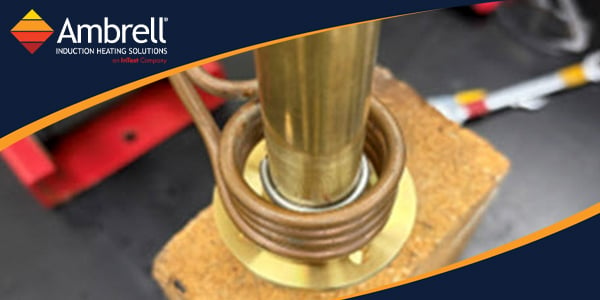
A custom three-turn helical coil was designed specifically for this application. The coil geometry played a critical role in generating the correct heat pattern across the steel plate so the rubber bond could be released efficiently.
During testing, the steel plate was heated to a target temperature of approximately 700 °F (370 °C) using an operating frequency of 241 kHz. Initial testing focused on optimizing the amount of power delivered to the part and achieving a consistent heat profile within the required time frame.
Once the desired heating pattern was established, additional samples were processed at multiple power settings to confirm repeatability and process stability. This testing approach ensured that the induction solution could consistently deliver the same results across repeated cycles.
There are several benefits to using induction heating for removing rubber bonded to ferrous substrates:
Induction heating met the customer’s time requirements, delivering rapid heating without the long ramp up periods typically associated with ovens or furnaces.
Because induction heating delivers energy in a controlled and predictable manner, the customer can expect the same result in the same amount of time for every cycle.
The induction system requires a relatively small footprint compared to other heating methods. In addition, the remote workhead design allows flexible placement within an existing production environment.
Unlike flame based methods, induction heating does not use an open flame. This reduces fire risk and improves overall workplace safety.
This application illustrates how induction heating can be used as a practical alternative to mechanical, chemical, or flame‑based methods for removing rubber bonded to steel. By heating the ferrous substrate directly and precisely, induction enables controlled debonding while minimizing risk to operators and surrounding components.
For manufacturers looking to reclaim metal parts, improve safety, or introduce a more repeatable thermal process, this application note from THE LAB at Ambrell provides a clear example of how induction heating can solve a challenging bonding problem efficiently and reliably.
Next week, Ambrell will be exhibiting at three leading industry events spanning North America and Europe. Whether you're exploring new production...
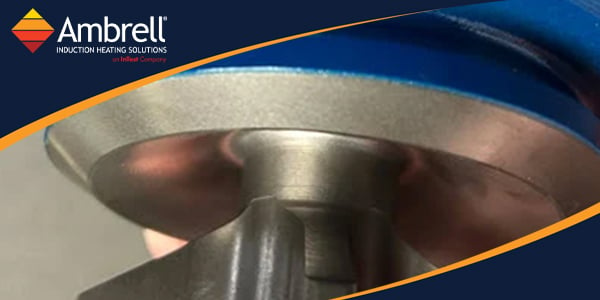
In the oil and gas industry, component reliability is critical. Fracking equipment operates in demanding environments where even minor manufacturing...
In antenna manufacturing, soldering quality is crucial. Poorly controlled heat can lead to inconsistent joints, unnecessary rework, and potential...