Ambrell to Exhibit at Three Manufacturing Tradeshows Next Week
Next week, Ambrell will be exhibiting at three leading industry events spanning North America and Europe. Whether you're exploring new production...


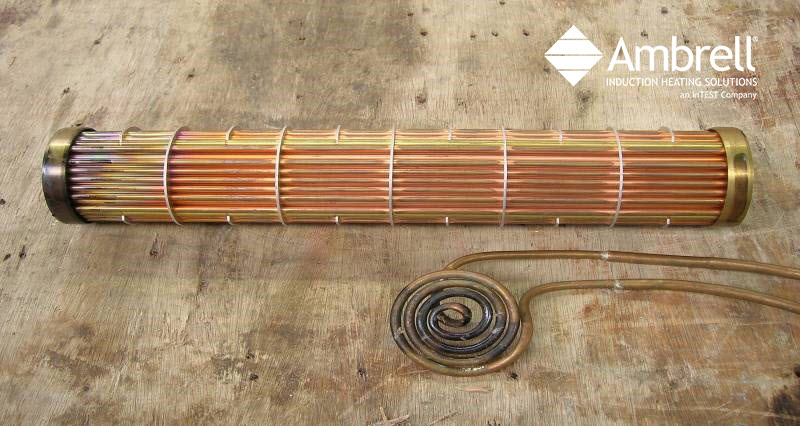
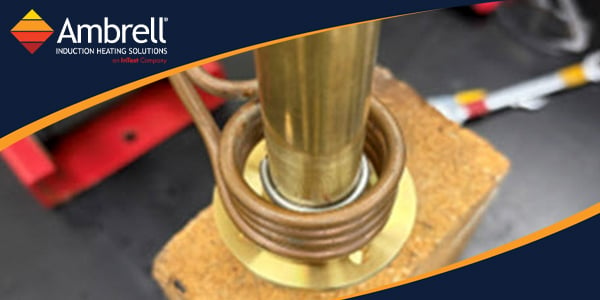
THE LAB at Ambrell tested an induction heating application involving soldering a brass end cap onto a heat exchanger. An Ambrell EASYHEATTM 10 kW, 150-400 kHz induction heating system equipped with a remote workhead and a dual four-turn pancake coil specifically designed for this application was determined to be the right solution for this soldering application. The system frequency was set to 237 kHz.
The dual four-turn pancake coil was used to solder two brass caps per cycle. Liquid solder was squirted onto the endcap and was heated for 18 seconds at 302 ºF (150 ºC) to burn off the flux. Then the heat was increased to 482 ºF (250 ºC) for 15 seconds to solder the parts. This allowed the client to heat two parts in 30 seconds instead of one part in 60 seconds like they did previously with the hot plate.
Using induction for a soldering application like this one offers several benefits. As already mentioned, there was a dramatic increase in the speed of heating with induction when compared to the client's hot plate process. Additionally, repeatability and even heating were critical benefits, and they enabled enhanced product quality. Finally, the increased speed also allowed the client to boost their production rate. Increased product quality and higher production led to their decision to switch to induction.
This is just one example of the many applications that THE LAB at Ambrell handles on a daily basis. You can explore a full range of application notes from various industries. And, of course, we welcome you to send in your parts for free testing. Be sure to ask about our Virtual Lab Service offering, where you can observe testing live from the comfort and convenience of your office. 
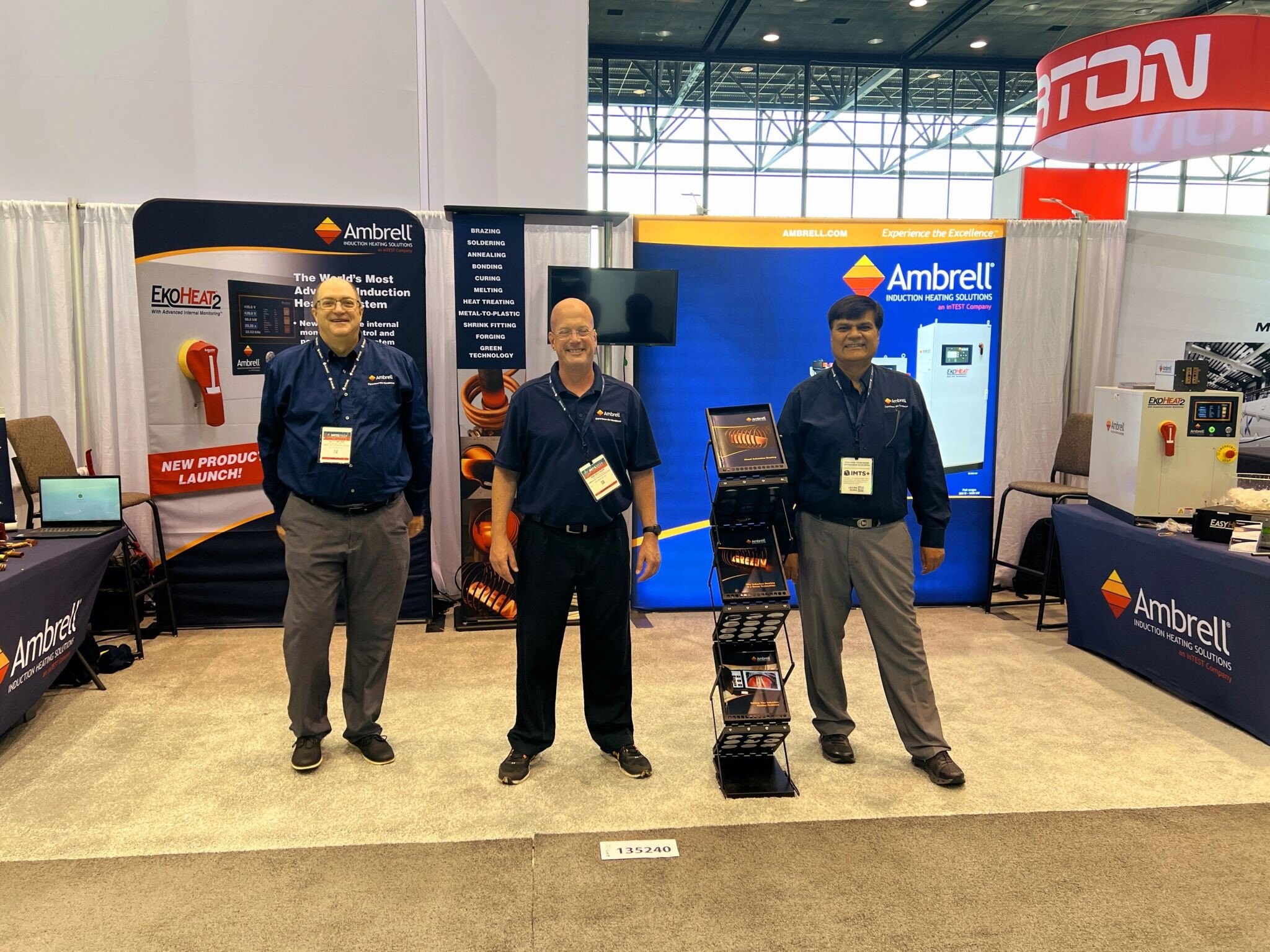
Next week, Ambrell will be exhibiting at three leading industry events spanning North America and Europe. Whether you're exploring new production...
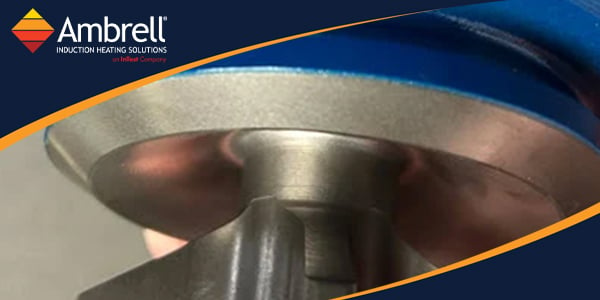
In the oil and gas industry, component reliability is critical. Fracking equipment operates in demanding environments where even minor manufacturing...
In antenna manufacturing, soldering quality is crucial. Poorly controlled heat can lead to inconsistent joints, unnecessary rework, and potential...