1 min read

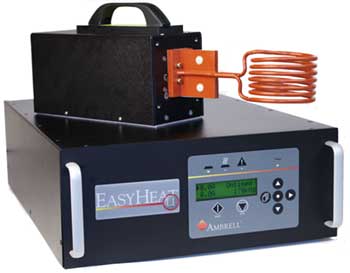
Ambrell EASYHEAT: Ideal for Research Applications

Ambrell, a leading manufacturer of induction heating systems, has sold an EASYHEAT 2 kW/150-400 kHz induction heating system to a university. The professor who purchased the system plans to use it for demonstrations that will be part of an engineering class. It will also be leveraged for research applications.


Induction is a popular industrial heating method, and consequently many engineering departments are beginning to take notice. They have begun highlighting the heating method as a part of their curriculum. The technology is also being used for a wide variety of research. Additionally, systems are commonly used for medical research applications within universities such as nanoparticle heating.

Ambrell has helped numerous universities with an array of testing through its complimentary applications testing. Experienced applications engineers assess the application and ensure induction is the right fit for the research application. Universities then purchase systems with peace-of-mind knowing that induction will meet their objectives.

Induction heating can be applied in a wide range of applications. Contact us for more information and discover how induction heating can benefit your research applications!

Contact Us

Curing Material on an Aluminum Mandrel

Curing Material on an Aluminum Mandrel

Objective Heat a customer supplied aluminum cylinder to 80-120°C for a material curing application. More application notes

Read More
9 Reasons to Consider Induction Heating for Manufacturing

9 Reasons to Consider Induction Heating for Manufacturing

In today’s manufacturing landscape, efficiency, precision, and sustainability are critical. Induction heating—a process that uses electromagnetic...

Read More
Induction Forging Steel Rods to Stamp Saw Blade Handles

Induction Forging Steel Rods to Stamp Saw Blade Handles

When it comes to many manufacturing processes, including this forging application, precision and efficiency are critical. Traditional heating methods...

Read More