Ambrell to Exhibit at Three Manufacturing Tradeshows Next Week
Next week, Ambrell will be exhibiting at three leading industry events spanning North America and Europe. Whether you're exploring new production...


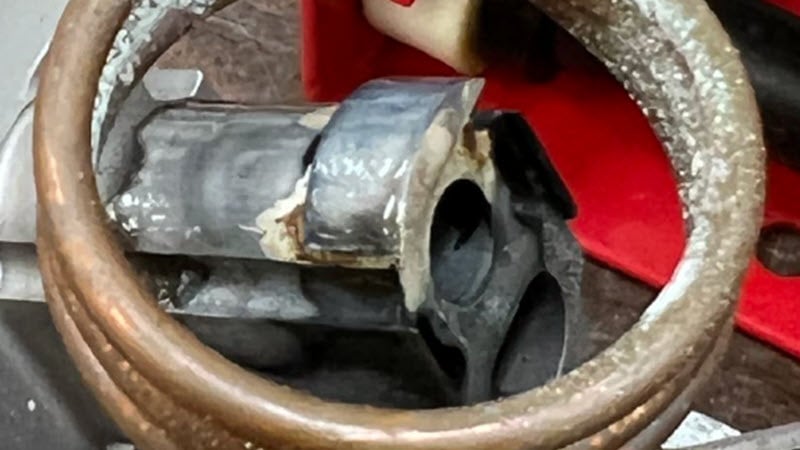
A customer contacted THE LAB at Ambrell because they had a new application that involved brazing a carbide insert into a steel tool. They wanted a fast, precise heating process and hoped induction might meet their objectives. THE LAB determined that an Ambrell EASYHEAT 2.4 kW, 150-400 kHz induction heating power supply with a custom-designed single position multiple-turn helical coil would meet their goals.
Initial tests were conducted to optimize the power delivered to the assembly. Temperature indicating paint was then applied, which dissolves when the assembly reaches target temperature. Two braze shim preforms along with black brazing flux were used during testing. It took 15-20 seconds to heat the sample to temperature and melt the braze alloy, which achieved the customer's time objectives.
Induction heating offered this customer several important benefits. First, the client was able to braze their parts within their time objectives. Induction is also highly repeatable, which ensures part quality. It's also a very precise heating method, so only the portion of the part that requires heating gets heated. In regards to safety, there is no open flame with induction heating. Finally, the expertise of THE LAB allowed the client to have peace-of-mind of knowing their application would work prior to investing in induction equipment.
If you have an application you'd like assessed by our application experts, contact THE LAB to take advantage of free induction heating application testing. We'll send your parts back for inspection, along with passing along a video showing you the heating process. You can even view it live with our Remote Lab Service or visit our facility to observe testing in person.
Choose from our selection of induction brazing application notes.

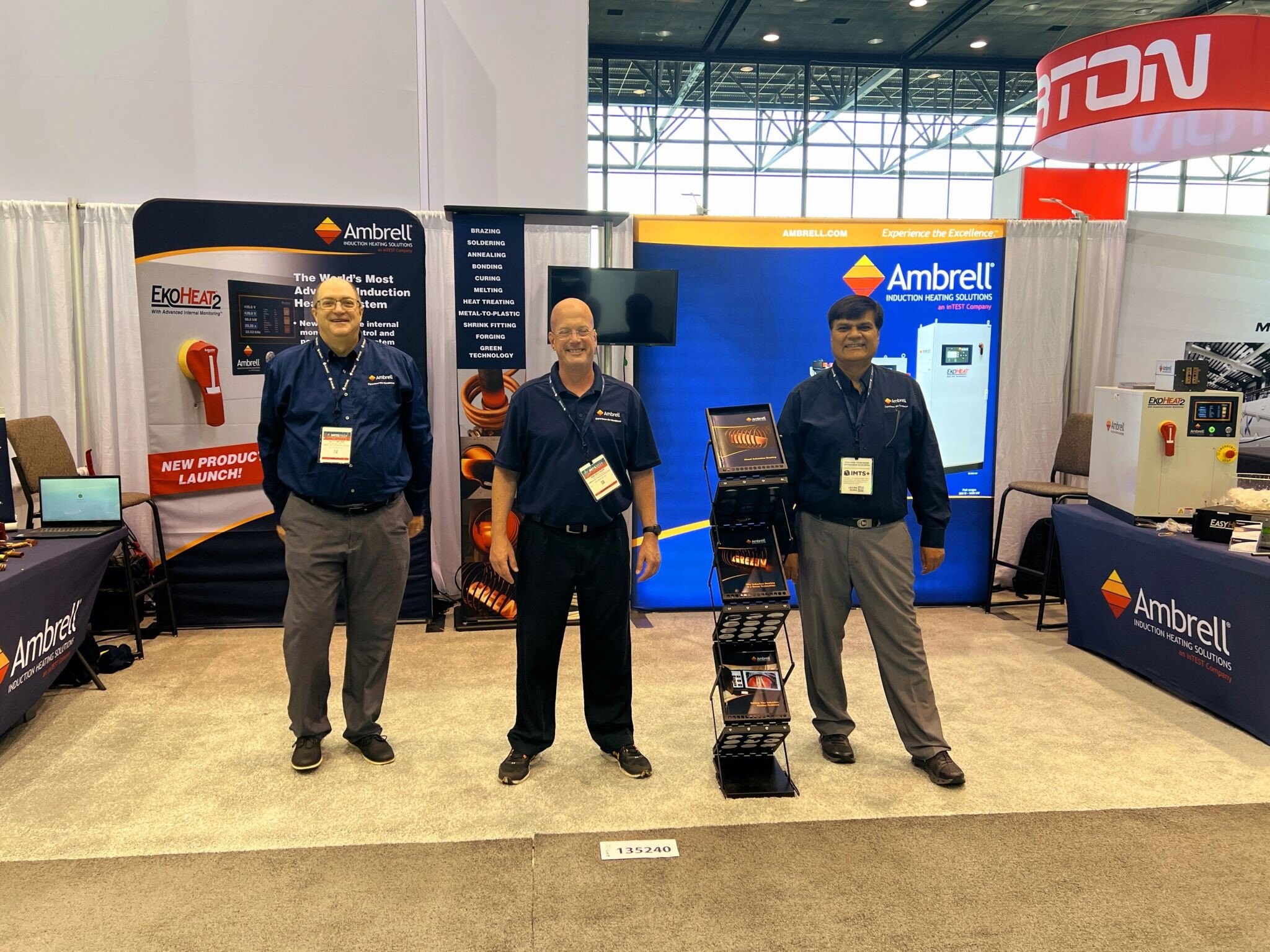
Next week, Ambrell will be exhibiting at three leading industry events spanning North America and Europe. Whether you're exploring new production...
In the oil and gas industry, component reliability is critical. Fracking equipment operates in demanding environments where even minor manufacturing...
In antenna manufacturing, soldering quality is crucial. Poorly controlled heat can lead to inconsistent joints, unnecessary rework, and potential...