Induction Heating Steel Valve and Flange Assemblies
Objective Large steel valves and flange assemblies are critical components in many industrial systems, but heating them efficiently for assembly,...


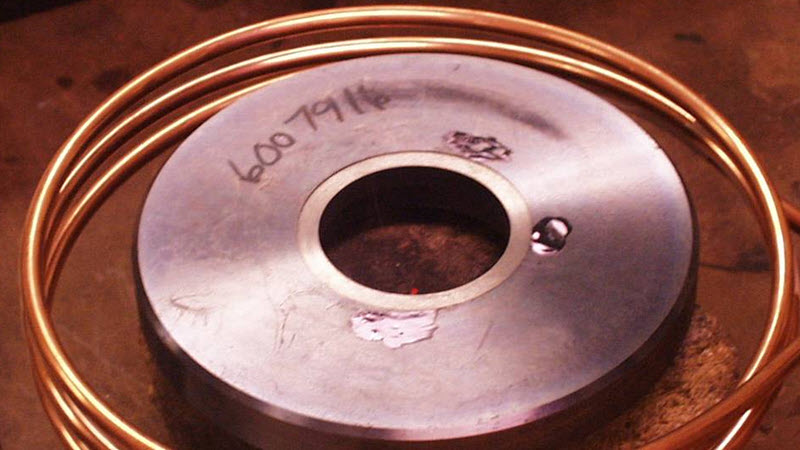
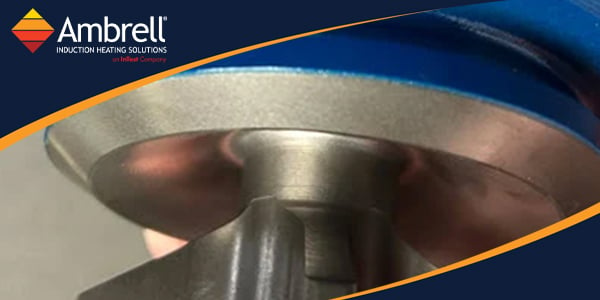
A client contacted THE LAB at Ambrell because they needed to shrink fit a carbide ring into a valve seat. The materials that were used during testing were a steel valve seat and a carbide ring. THE LAB determined that an EASYHEATTM 10 kW, 150-400 kHz induction heating power supply with a three-turn helical coil to heat the steel valve seat would be the correct solution for this shrink fitting application.
First, initial tests were conducted to optimize the power delivered to the parts. Then THE LAB began parts testing. The steel valve seat was placed in the helical coil and heated for 50 seconds to enlarge the center hole. Then the carbide ring was dropped in to complete the shrink fitting process. Testing was successful and achieved all of the client's requirements.
For this client, getting a repeatable, reliable result time after time drove the decision to switch to induction heating. When compared to other heating methods for shrink fitting, induction's benefits include its speed along with its localized, repeatable, non-contact heating. Induction is also energy efficient, as it heats the part, not the atmosphere around the part. Finally, it's easily integrated into production lines due to its modest size, especially when you consider that the workhead can be placed away from the system itself.
THE LAB at Ambrell has a significant amount of experience with induction shrink fitting applications. Get a sampling of additional shrink fitting applications assessed by THE LAB. And, to learn more about free application testing, visit our page on THE LAB or contact us today to get the process started. There, you can also learn more about our recently introduced "Virtual Lab Service."
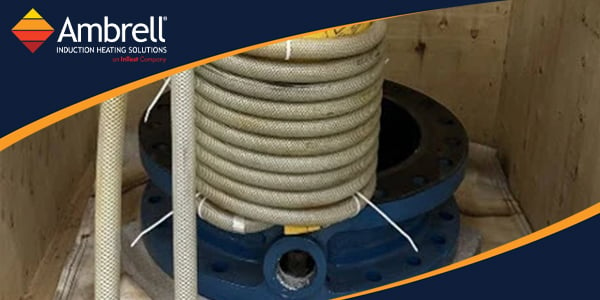
Objective Large steel valves and flange assemblies are critical components in many industrial systems, but heating them efficiently for assembly,...
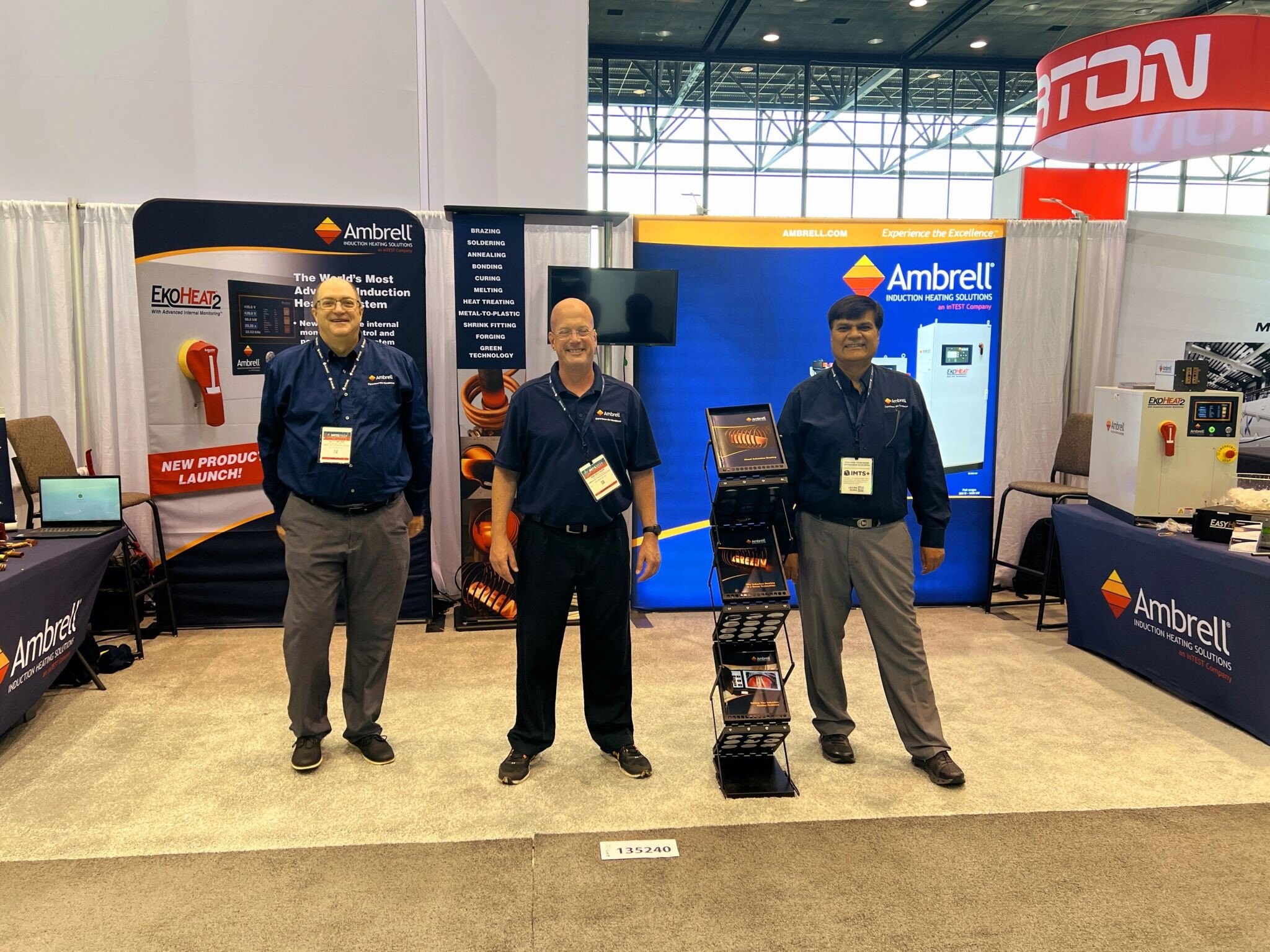
Next week, Ambrell will be exhibiting at three leading industry events spanning North America and Europe. Whether you're exploring new production...
In the oil and gas industry, component reliability is critical. Fracking equipment operates in demanding environments where even minor manufacturing...