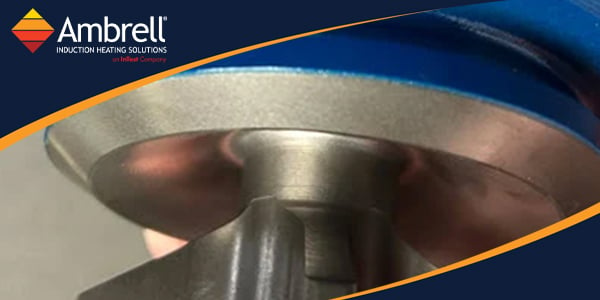
Induction Heating Steel Valve and Flange Assemblies
Objective Large steel valves and flange assemblies are critical components in many industrial systems, but heating them efficiently for assembly,...


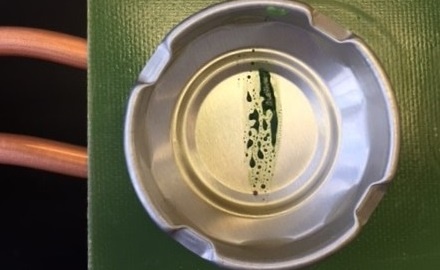
A client in the beverage industry needed to heat aluminum caps for a cap sealing application. The application involved reusable caps on aluminum cans. THE LAB at Ambrell determined that an EKOHEAT® 45 kW, 50-150 kHz induction heating system equipped with a custom coil and remote workhead would work well for this heating application.
A single position hairpin coil was built for this application and temperature indicating paint was applied to the samples. Temperature indicating paint dissolves when the part reaches the targeted temperature. THE LAB's testing determined that it took 1.25 seconds to heat the nine samples to a targeted temperature of 204 °C (400 °F). This met the client's production objective.
The client turned to Ambrell for several reasons. First off, the expertise of THE LAB was a significant factor, as they knew they'd have the process proven out prior to making an investment in equipment. They also knew that induction was a fast and repeatable heating method when implemented correctly. Finally, Ambrell's systems are compact so they fit right into their production footprint.
Click here to read about other cap sealing applications tested by THE LAB at Ambrell or fill out our Lab Service Request form to get complimentary parts testing for your application.
Objective Large steel valves and flange assemblies are critical components in many industrial systems, but heating them efficiently for assembly,...
Next week, Ambrell will be exhibiting at three leading industry events spanning North America and Europe. Whether you're exploring new production...
In the oil and gas industry, component reliability is critical. Fracking equipment operates in demanding environments where even minor manufacturing...