Induction Heating Steel Valve and Flange Assemblies
Objective Large steel valves and flange assemblies are critical components in many industrial systems, but heating them efficiently for assembly,...


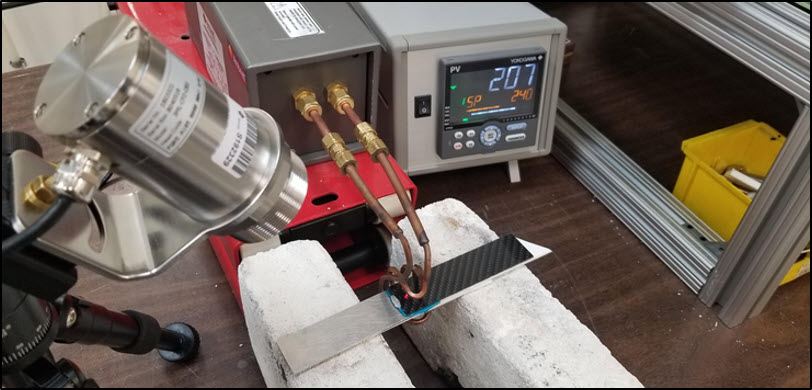
A research firm needed to heat aluminum and carbon fiber coupons to 392 °F (200 °C) for a bonding application, and they turned to THE LAB at Ambrell to develop a solution.
More induction bonding application notes
THE LAB built three custom-designed single position multiple-turn coils for the application and determined an Ambrell EASYHEATTM 2.4 kW, 150-400 kHz induction heating system would meet their requirements.
Initial tests were conducted to optimize the power delivered to the part. Temperature indicating paint was then applied to the part, which dissolves when the part reaches the target temperature. It took three minutes to heat the sample to 392 °F (200 °C). The three different coil designs were tested to determine which one was ideal.
Induction heating offers several benefits compared to other heating options. Induction heating is precise and consistent which enables consistent quality joints. It also tends to be more energy efficient. It's fast, so it can lead to a reduction in process time. Finally, induction requires a modest footprint and has small workheads, meaning it can be easily integrated into assembly lines.
If you'd like your application tested, contact THE LAB to take advantage of complimentary induction heating application testing from our expert applications team.
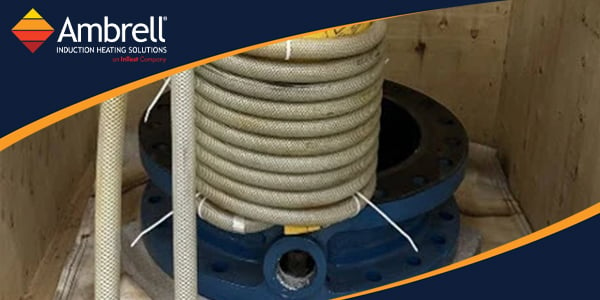
Objective Large steel valves and flange assemblies are critical components in many industrial systems, but heating them efficiently for assembly,...
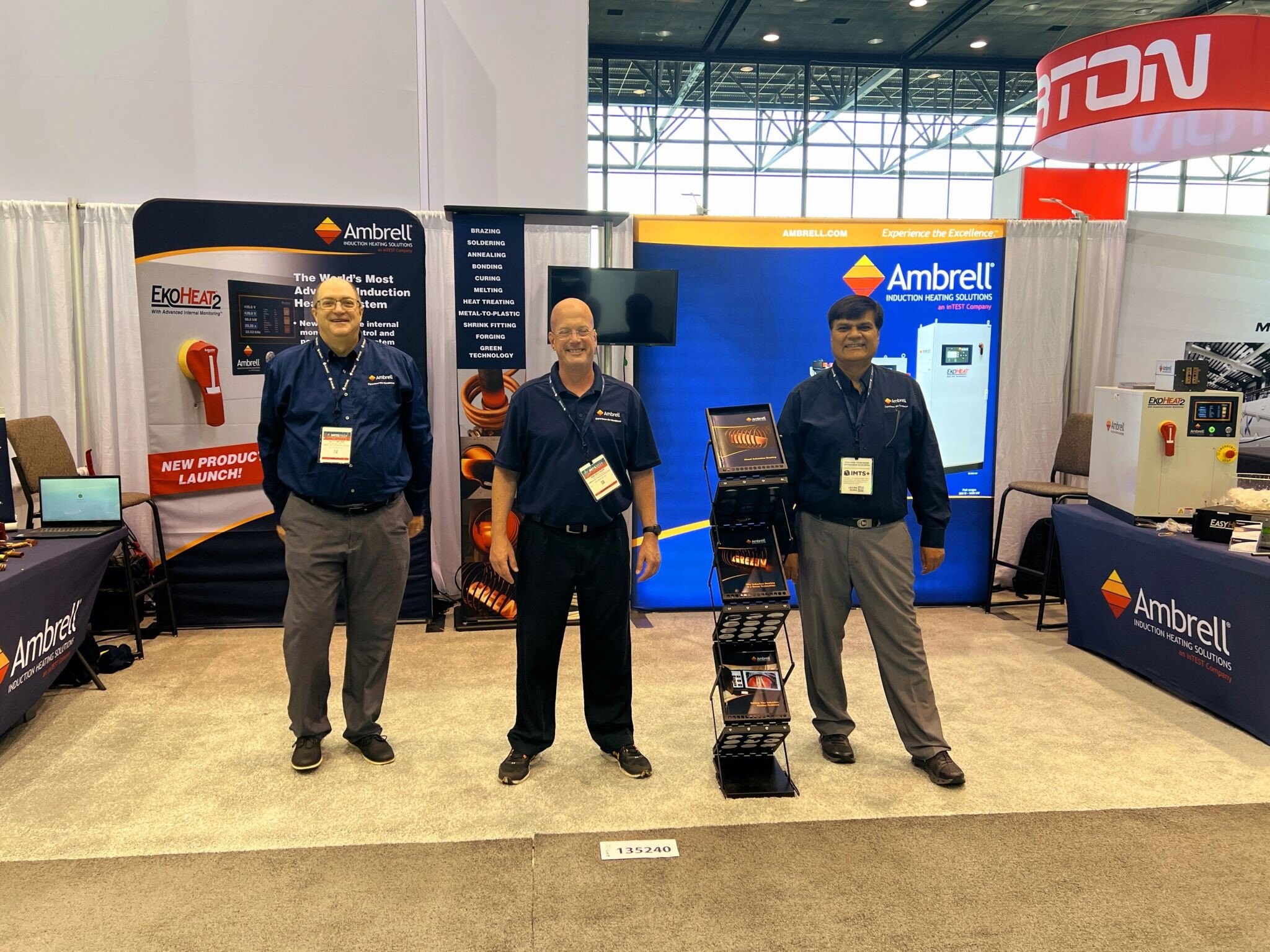
Next week, Ambrell will be exhibiting at three leading industry events spanning North America and Europe. Whether you're exploring new production...
In the oil and gas industry, component reliability is critical. Fracking equipment operates in demanding environments where even minor manufacturing...