Ambrell to Exhibit at Three Manufacturing Tradeshows Next Week
Next week, Ambrell will be exhibiting at three leading industry events spanning North America and Europe. Whether you're exploring new production...



When it comes to many manufacturing processes, including this forging application, precision and efficiency are critical. Traditional heating methods like torches or furnaces often fall short, leading to inconsistent results and longer cycle times. Induction heating can offer a better solution for many manufacturing processes.
A customer needed to heat steel rods for stamping saw blade handles. The process required:
Rapid heating to forging temperature
Consistent results for every cycle
Energy efficiency compared to conventional methods
Ambrell’s EKOHEAT® induction heating system was deployed with a custom-designed coil. This setup delivered:
Induction heating offers several advantages over traditional methods:
For manufacturers looking to improve throughput and quality in forging applications, induction heating is a proven solution. It’s faster, safer, and more efficient—perfect for process heating applications such as this one.
Visit our induction forging applications page to review other forging application notes from THE LAB at Ambrell. If you have an application that might benefit from induction heating, be sure to take advantage of complimentary application testing from THE LAB.

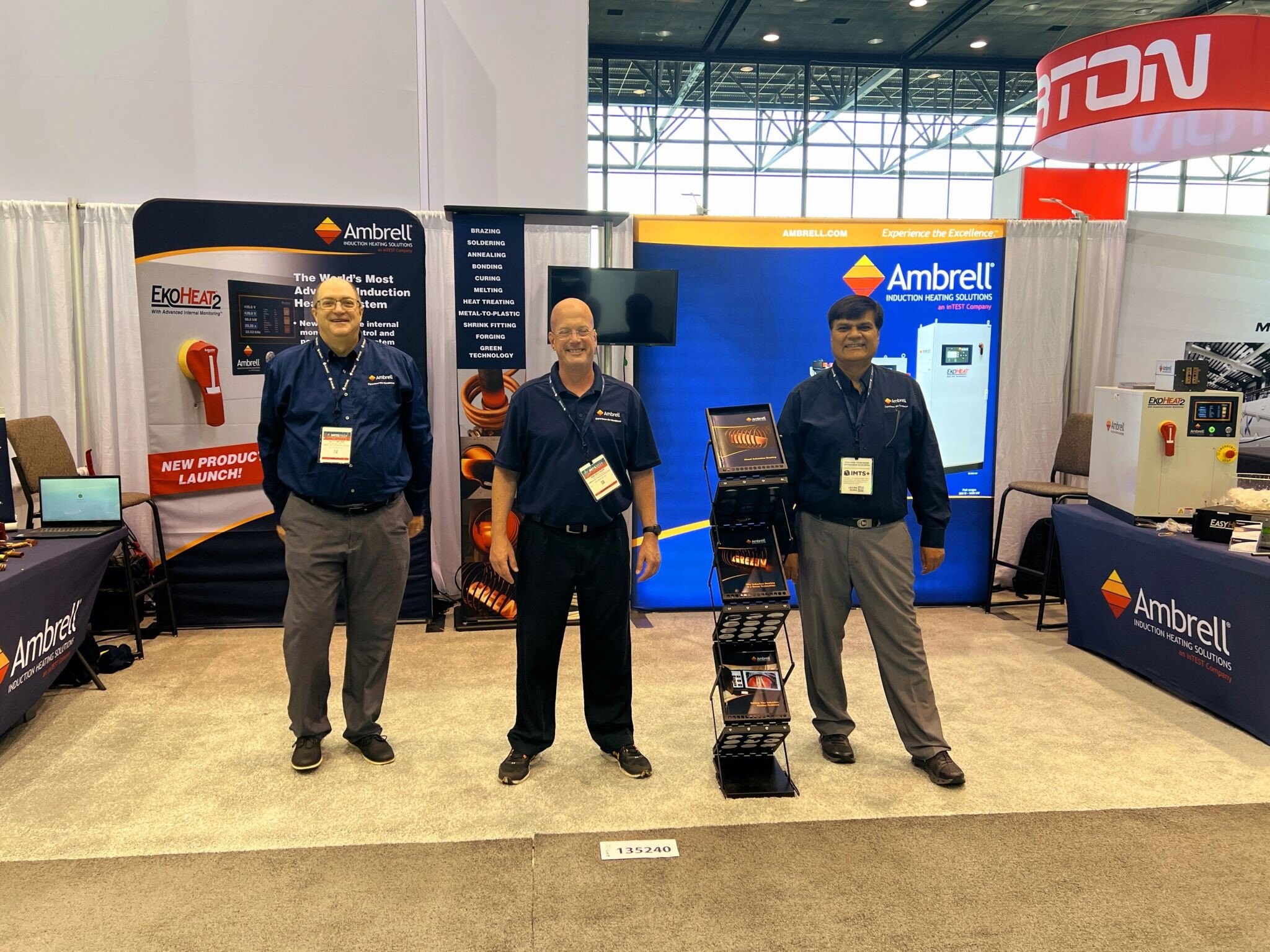
Next week, Ambrell will be exhibiting at three leading industry events spanning North America and Europe. Whether you're exploring new production...
In the oil and gas industry, component reliability is critical. Fracking equipment operates in demanding environments where even minor manufacturing...
In antenna manufacturing, soldering quality is crucial. Poorly controlled heat can lead to inconsistent joints, unnecessary rework, and potential...