Induction Heating Steel Valve and Flange Assemblies
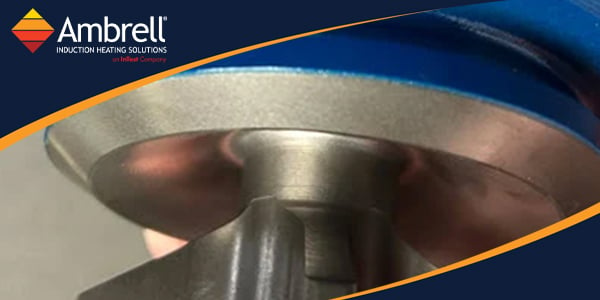
Objective Large steel valves and flange assemblies are critical components in many industrial systems, but heating them efficiently for assembly,...


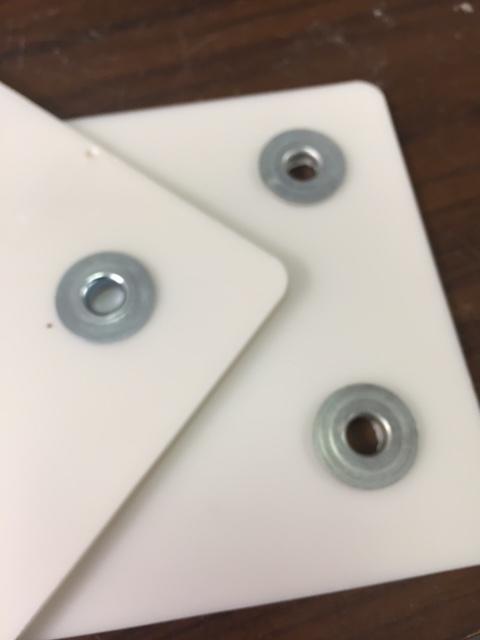
A client approached THE LAB at Ambrell looking to insert magnetic steel inserts into a plastic part in under ten seconds without the part cracking. The client decided to take advantage of THE LAB's complimentary parts testing and sent parts in. Upon receiving the parts, the applications engineers got to work to determine the feasibility of the application with induction heating from Ambrell.
A specially designed multiple turn, two position helical coil was developed for this metal-to-plastic insertion application. THE LAB determined that an EASYHEATTM 2 kW induction bonding system would be optimal for this application. Temperature indicating paint was applied to the part which dissolved at 400 oF (204 oC), which was the target temperature. A plastic sheet was placed over the coil, the steel insert was then pressed into the plastic part and the induction power was turned on. It took five seconds for the inserts to reach temperature with a 2 kW EASYHEAT, which melted the plastic and created a solid bond without cracking the molded plastic.
Benefits of this solution from THE LAB include speed, precise targeted heating and the minimal footprint required by the EASYHEAT unit. Additionally, an EASYHEAT can be easily integrated into the client's production process. Check out more metal-to-plastic insertion (heat staking) application notes by clicking the image below.

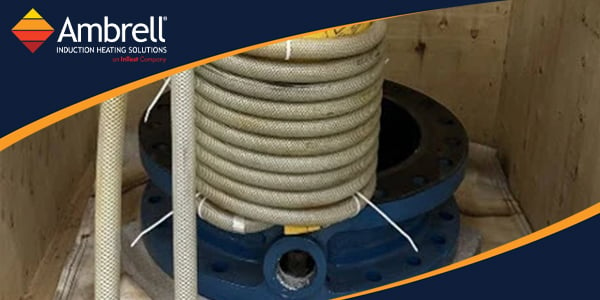
Objective Large steel valves and flange assemblies are critical components in many industrial systems, but heating them efficiently for assembly,...
Next week, Ambrell will be exhibiting at three leading industry events spanning North America and Europe. Whether you're exploring new production...
In the oil and gas industry, component reliability is critical. Fracking equipment operates in demanding environments where even minor manufacturing...